Omni Legal Group logo
Omni Legal Group Blog Omni Legal Group Blog
  • ABOUT US
  • SERVICES
    • BUSINESS LAW
      • BUSINESS LITIGATION
      • BUSINESS FORMATIONS/TRANSACTIONS
      • BUSINESS CONSULTANCY
    • PATENTS
      • PATENT FILING
        • DESIGN PATENT
        • UTILITY PATENT
      • PATENT LITIGATION
    • Trademarks
      • TRADEMARK FILING
        • TRADEMARK REGISTRATION
        • TRADEMARK TRANSFERS
        • TRADEMARK SEARCHES
        • INTERNATIONAL TRADEMARKS
      • TRADEMARK LITIGATION
    • copyrights
    • Cyber Law
    • Trade Secret LAW
    • Mediation
  • CONTACT US
    • Los Angeles
    • Beverly Hills
    • Santa Monica
  • RESOURCES
    • VIDEOS
    • Publications
    • Blog
    • HELPFUL LINKS
    • IN THE NEWS
    • FAQ’s
  • Philanthropy
  • ABOUT US
  • SERVICES
    • BUSINESS LAW
    • PATENTS
    • Trademarks
    • copyrights
    • Cyber Law
    • Trade Secret LAW
    • Mediation
  • CONTACT US
    • Los Angeles
    • Beverly Hills
    • Santa Monica
  • RESOURCES
    • VIDEOS
    • Publications
    • Blog
    • HELPFUL LINKS
    • IN THE NEWS
    • FAQ’s
  • Philanthropy
  •  

Blog Old

Home / Blog Old - Page 21

Our Latest News

Does copyright infringement arise out of publishing embedded content from third-party websites?

  • Mashable Embed Instagram Copyright

            The United States District Court for the Southern District of New York recently determined that Mashable lawfully used a photojournalist’s photograph pursuant to a sublicense from Instagram. Following a motion to dismiss by defendants, Mashable and parent company, Ziff Davis, the court held no copyright infringement had occurred by embedding the Instagram photo in an article. As a result, the plaintiff’s, Stephanie Sinclair, complaint for copyright infringement was dismissed.

            The dispute began in March 2016, when an article titled “10 female photojournalists with their lenses on social justice” was published. The article highlighted the work of ten female photographers whose work focuses on social justice. One of the photojournalists featured, Sinclair, shoots for National Geographic and aims to protect girls’ rights and end child marriage by documenting sensitive human rights topics internationally. With a particular focus on gender issues, Sinclair most frequently shoots the subjects of child marriage and self-immolation. At issue is one photograph in particular, titled “Child, Bride, Mother/Child Marriage in Guatemala.” Mashable initially offered Sinclair $50 for rights to this photograph for the article. When Sinclair declined, Mashable embedded the image from Sinclair’s official Instagram account. Shortly thereafter, Sinclair filed a lawsuit for copyright infringement.

            In including Sinclair’s Instagram photo in their article, Mashable used a process called “embedding.” This technical process allows a website coder to incorporate content that is located on a third-party’s server into the coder’s website. When users visit said website, the user’s Internet browser retrieves the embedded content from the third-party server and displays it on the website. Thus, the user sees the embedded content on the website, despite the fact of it actually being hosted on a third-party’s server. Instagram uses an “application programming interface,” or “API,” to enable users to access and share content posted to “public” accounts, such as Sinclair’s. Here, Mashable used the API to embed Sinclair’s photograph from her Instagram account to their article.

            Previously, the nature of this lawsuit revolved around the server test. This doctrine focuses on the fact that a publication which uses a photo-embed code never stores the photo on its own servers or transmits it to the user. Rather, the embed code instructs the user’s Internet browser how to download the image directly from another site. In this case, the other site was Instagram, and particular, Sinclair’s official, public account. A majority of courts have found such use of third-party content to not constitute copyright infringement because the publisher is not distributing or displaying the content to users. Other courts, including the Southern District of New York, have found infringement in these instances claiming the technical details of how the photograph reached the user’s browser does not overshadow the fact that the news websites caused the photo to appear on user’s browsers without permission from the copyright holder. Problematically, under the server test, those who evaded liability for direct infringement could still be held liable for indirect copyright infringement.

            Instead of relying on the server test, Mashable argued Sinclair granted a license to Instagram to use her photo when she uploaded it. In addition, Instagram’s terms of service state that it has the right to sub-license the photo to others. A copyright owner who permits a licensee to grant sublicenses cannot bring an infringement suit against a sublicensee, so long as the licensee and sublicensee have acted within the terms of their license and sublicense, respectively. Indeed, a sublicensee cannot acquire valid rights to copyrighted works if the sublicensor had no right to issue a sublicense in the first place.

            By using Instagram’s embedding service, Mashable was lawfully sublicensing the photo from Instagram. The court agreed with this argument in finding no copyright infringement had occurred. This licensing-based reasoning clearly distinguishes between authorized and unauthorized social media uploads. Importantly, through a site like Instagram, which is automatically granted a license to content uploaded to its platform, the user who uploads content may disable any third-party use of the same by marking the post as private. Sinclair appears to have done just that as her photograph no longer appears in Mashable’s article. Moreover, any sublicense arising out of an Instagram-posted photo is limited to the embedding tool. Thus, if Mashable, or another entity, sought to use the photo for another purpose, it would require a separate license from Sinclair.

Read More

What types of intellectual property issues has Netflix’s popular “Tiger King” series presented?

  • Tiger King

            Netflix’s “Tiger King” has become a mainstay in many American households during this period of quarantine. Indeed, in the first few days following the hit, true-crime documentary miniseries’ March 20th debut, more than thirty-four million viewers tuned in to follow the demise of Joe Exotic. Exotic is a self-proclaimed “gay, gun-carrying redneck with a mullet” who owns a big cat roadside zoo and animal park in Oklahoma. Moreover, those who watched learned that Joe Exotic’s intellectual property infringement was the first step in a series of negative events that eventually led to his conviction and prison sentence.

            While much of “Tiger King” tracks Exotic’s bitter, decades-long discord with animal conservationist Carol Baskin, one particular episode focuses on trademark and copyright disputes between the pair. Baskin is the owner of Big Cat Rescue, which takes in large felines and allows them to live out their days in caged conditions. Baskin’s purported goal is to make the selling of exotic cats in the United States illegal. Baskin trademarked her logo, which includes the words “Big Cat Rescue.” Later, in the heat of the pair’s bad blood, Joe Exotic named his traveling venture “Big Cat Rescue Entertainment,” with a logo that looks uncannily similar to Baskin’s.

            Notably, prior to Exotic’s use of “Big Cat Rescue Entertainment,” Baskin did not own a trademark for the phrase “Big Cat Rescue.” Instead, she merely owned a design mark for a logo that incorporated “Big Cat Rescue.” However, during prosecution of Baskin’s design mark, the trademark office required a disclaimer of “big cat rescue.” A disclaimer does not remove the disclaimed matter from the mark but is simply a statement that the trademark applicant does not claim exclusive rights in the disclaimed wording apart from the mark as shown in the drawing. In addition, just because Baskin failed to secure registration of the words by themselves, she may have nonetheless been entitled to common law protection due to her extensive prior use of the same. Thus, absent the consent judgment, Exotic may potentially have been able to prevail on his use of “Big Cat Rescue Entertainment.” That being said, due to the highly similar nature of the respective logos, as well as, the nearly identical services, Exotic likely would have lost on the design mark claim.

            Later, between 2011 and 2012, a second lawsuit was filed against Joe Exotic by Carol Baskin and her husband alleging copyright violations. This litigation arose due to Exotic’s misappropriation and posting online of various photographs to which Baskin owned copyrights. During depositions, Exotic admitted to posting the pictures but still asserted that Baskin was not the original owner of the photos. Such an argument is irrelevant in copyright law and as such, Exotic was forced to pay Big Cat Rescue Corp. damages totaling $75,000. However, as a result of the consent judgment in the trademark dispute, Exotic owed more than $950,000 in damages, for a total of over a million dollars in judgments against him. As a result, Exotic became bankrupt.

            Meanwhile, since the series’ release, multiple individuals or entities have filed trademark applications for marks including “TIGER KING” and “JOE EXOTIC.” For instance, one application for “JOE EXOTIC” is for hats, sweatshirts, and t-shirts, and was filed by a California company that presumptively has no connection to the Oklahoma-based flamboyant feline lover. By way of further example, applications for “TIGER KING” include for plush toys, clothing, bean bag chairs, decorative seasonal stockings, Halloween costumes, and multimedia goods. While these entities may believe they have gotten ahead of the curve by cashing in early on the series’ sudden popularity, their changes of security registration are most likely slim to none.

            In particular, unlike the patent system, under which the first inventor to file an application is entitled to rights (assuming the other requirements of patentability are satisfied), trademarks are not awarded based solely on a first-to-file system. Rather, for trademarks, it is the first entity that uses the mark in commerce that matters. Moreover, unless the applicants get Joe Exotic to consent to the use of his name, the Trademark Act, which bars federal registration of a mark that consists of or comprises matter which falsely suggests a connection with a famous person, will likely block these applications from registering.

Read More

Can one copyright a graphic depiction of a mood?

  • Graphic Depiction Mood

            In an action to determine whether certain anthropomorphized characters representing human emotions qualify for copyright protection, the United States Court of Appeals for the Ninth Circuit affirmed the district court’s dismissal of the action. The lawsuit was filed by Denise Daniels and The Moodster Company, who created “The Moodsters.” In their complaint, plaintiffs alleged that The Walt Disney company and Pixar infringed their copyrighted characters through the movie “Inside Out.” The Ninth Circuit also affirmed the district court’s denial of plaintiffs’ claim for breach of an implied-in-fact contract under California law based on plaintiffs’ alleged disclosure of information about The Moodsters to various employees of Disney and its affiliates.

            Plaintiff Daniels is an expert on children’s emotional intelligence and development and designs and promotes initiatives that help children cope with their emotions. As a commercial application of this work, Daniels developed “The Moodsters” and hired a team under her company, The Moodsters Company. The Moodsters are lightly sketched anthropomorphized characters representing human emotions. The Moodsters include five characters that are color-coded anthropomorphic emotions, each representing a different emotion: pink for love, yellow for happiness, blue for sadness, red for anger, and green for fear.

            In 2007, Daniels and her team created a 30-minute pilot episode for a television series featuring The Moodsters, titled “The Amoodsment Mixup,” which was later available on YouTube. Between 2012 to 2013, plaintiffs developed a line of Moodster products, including toys and books that were sold at Target and other retailers beginning in 2015. Moreover, plaintiff claims to have pitched The Moodsters to numerous media and entertainment companies. Notably, plaintiff alleges that the Walt Disney Company and Pixar were recurring targets, although no deal was ever reached.

            Meanwhile, Disney began development of “Inside Out” in 2010 and the film was released in 2015. “Inside Out” centers on five anthropomorphized emotions that live inside the mind of an 11-year-old girl. Slightly different than The Moodsters, these emotions are joy, fear, sadness, disgust, and anger. In addition, in Disney’s telling, yellow is for joy, blue is for sadness, red is for anger, green is for disgust, and purple is for fear.

            In 2017, plaintiffs filed their lawsuit for copyright infringement of The Moodster characters and breach of an implied-in-fact contract. According to plaintiffs, the contract arose from Disney using plaintiffs’ characters to develop “Inside Out” and the breach occurred when Disney failed to compensate plaintiffs for the material. As to copyright infringement, plaintiffs alleged infringement of the individual Moodster characters and the entire ensemble of characters. Disney responded to the lawsuit by filing a motion to dismiss, alleging that plaintiff failed to meet the standard for copyright protection and that plaintiff’s publication of the characters doomed plaintiff’s breach of contract claim. The district court granted Disney’s motion to dismiss and plaintiff appealed to the Court of Appeals for the Ninth Circuit.

            At primary issue in this case is whether The Moodsters constitute copyrightable material. While characters are not an enumerated copyrightable subject matter, courts have often extended such protection to graphically depicted characters. A character is entitled to copyright protection only if (1) the character has physical as well as conceptual qualities, (2) the character is sufficiently delineated to be recognizable as the same character whenever it appears and displays consistent, identifiable character traits and attributes, and (3) the character is especially distinctive and contains some unique elements of expression.

            Disney conceded that The Moodsters certainly have physical as well as conceptual qualities. However, the court determined that these characters do not qualify for copyright protection because they lacked consistent, identifiable character traits and attributes and were not especially distinctive. In particular, the notion of using a color to represent a mood or emotion is an idea that does not fall within the realm of copyright protection. The court noted the vast number of works featuring the idea of color psychology. The court further noted that colors themselves are generally not copyrightable. Moreover, The Moodsters changed significantly over time and therefore, lacked consistent, identifiable character traits. For example, the characters’ names changed throughout the various iterations. Indeed, other than the notion of color and emotions, there are few other identifiable character traits and attributes that have remained consistent across the various versions of The Moodsters.

            Further, The Moodsters did not qualify for copyright protection under the alternative “story being told” test. Under this test, a character can be subject to copyright protection if it constitutes the story being told. In other words, to be eligible for protection, the character must be central to the story. On the other hand, if the character is “a mere chessman in the game of storytelling,” no protection subsists. Here, the court found that the depictions of The Moodsters failed to include any substantial character development or character study. Therefore, the court held that that characters each serve as a means by which particular emotions are introduced and explored.

Read More

What innovation has resulted from the ongoing coronavirus pandemic?

  • Salicit Techologies Covid19 Detection

            As the physical world has become increasingly inaccessible as a result of lockdowns announced in various countries, people have availed themselves of the virtual world. Numerous existing and novel applications have seen a significant increase in traffic as users find themselves seeking mental sustenance. Indeed, while applications such as HouseParty, Zoom, WhatsApp, and Netflix have addressed these needs and desires, other software has been released that may directly address the coronavirus pandemic.

            Salcit Technologies is an India-based startup that has released an application that can be downloaded to one’s smartphone and that purportedly provides on demand respiratory assessment during early stages of the coronavirus disease. The technology implements audiometric evaluation of coughing, wheezing, breathing and crackling sounds to determine whether the sound is attributable to the patient’s airways, parenchyma, or pleura of the lungs. The system allows patients to remotely perform these assessments using only the speaker on their smartphone. In addition, this at-home assessment frees up doctors and other medical personnel who would normally diagnose these patients in-person or via other virtual healthcare services, such as Teladoc. The application also provides tracking of the patient’s symptoms and therefore, disease progress.

            Salcit Technologies was granted an Indian Patent, No. 308156, for this invention, as well as, an International Patent Cooperation Treaty Application, Publication No. WO2019116381. The disclosure, titled “Method and System for Analyzing Risk Associated with Respiratory Sounds,” describes assigning a “risk category” to respiratory sound signals captured by an acoustic sensor, that is, the microphone of one’s device. In this system and method, the patient also inputs information related to their symptoms. Interestingly, while the invention is likely to prove useful for diagnosing and tracking coronavirus symptoms, the patent was granted in India in December 2017 and published worldwide June 2019.

            Other applications have been developed to assist in health tracking. Two such apps, Coviguard and Covicare, track health statistics of individuals and also provide area-wide spread of the coronavirus.  Similarly, another app, aptly called “Covid Symptom Tracker” helps people track symptoms related to coronavirus. This application in turn takes into account the rate at which the virus is spreading in a user’s area, high-risk areas, high-risk individuals, and other related analytics, thereby curbing the spread of the virus. Moreover, other technology companies have taken additional steps to slow the pandemic. As one example, together with the Center for Disease Control and Prevention, the White House coronavirus task force, and the Federal Emergency Management Agency, Apple launched a COVID-19 website and application that includes both information related to the disease as well as a screening tool.

            While, for now, these tools are provided by way of free applications that can be downloaded directly to one’s smartphone, other coronavirus-related innovation may be subject to patent protection. This highlights a tension within the patent system, which simultaneously provides incentive for research and development while disallowing the fruits of that innovation to be publicly enjoyed (at least for the term of the patent). When an inventor is granted a patent, they are provided a twenty-year term during which they may exclude others from making, using, offering for sale, selling, or importing into the United States the invention claimed in the patent. Thus, arguably, if one were to invent a cure, a vaccine, method of diagnosing, or other helpful tool in the fight against coronavirus, this inventor could receive a patent and prevent others from benefiting from the invention. These concerns could potentially be addressed through a compulsory licensing scheme, adopted in other countries (not the United States), under which patents related to treating, diagnosing, or preventing the novel coronavirus present an exception to this rule.

Read More

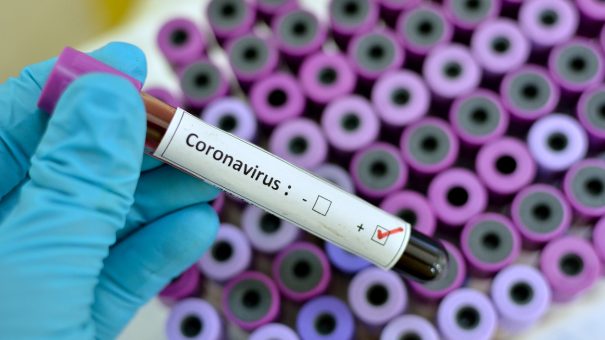
Can a test for COVID-19 be subject to patent infringement?

  • CoronaVirus– Patent Infringemnet

            Labrador Diagnostics has filed a lawsuit in the United States District Court for the District of Delaware against BioFire Diagnostics, a company that makes medical testing equipment and most recently, developed a test for the new coronavirus. The lawsuit alleges patent infringement of two of Labrador’s patents related to testing the presence of substances in bodily fluids. Labrador purchased these, and other, original Theranos’ patents after the failed blood-testing startup sold its patent portfolio to Fortress Investment Group in 2018.

            One of the Theranos patents, United States Patent No. 8,283,155, teaches point-of-care fluidic systems and uses thereof. The patent describes a generic architecture for a machine that automates testing for the presence of substances in bodily fluids. The system includes a test device and a reader device. The test device contains both the patient’s bodily fluid to be tested and the reactants required to perform the test. However, no particular reactants, other than generally an immunoassay and nucleic acid reagents, or bodily fluids are disclosed. The reader device triggers the chemical reactions necessary to perform the test and reports the results. Again, however, no particular testing protocol is disclosed.

            The other Theranos patent-in-suit, United States Patent No, 10,533,994, teaches systems and methods of sample processing and fluid control in a fluidic system. The system generally comprises a cartridge for sample collection and assaying and a reader assembly for detection of the presence or absence of the analyte and communication of the same. Again, no particular reactants or bodily samples are disclosed, nor are any reaction types. Indeed, the reactant is described as something that “reacts with the analyte to yield a signal indicative of the presence of the analyte.”

            A working prototype or actual use of an invention is not needed to obtain a patent. In this way, your technology need not necessarily work in order to obtain a patent. This is how Theranos managed to obtain numerous patents regardless of its famed inability to produce functioning technology. Indeed, all that is needed to obtain a patent is a novel, non-obvious invention. In addition, a patent document must sufficiently describe the technology on which a patent is sought by disclosing the technologic knowledge upon which the patent is based and demonstrating that the inventor was in possession of the invention that is claimed at the time of filing.

            The defendant-in-suit, BioFire Diagnostics, offer a BioFire Filmarray machine that automates detection of a variety of pathogens. Labrador claims that each of BioFire’s FilmArray devices, including the accompanying pouches and software, infringe its patents. Most recently, BioFire added coronavirus to the slate of pathogens capable of detection. Prior to the initiation of this litigation, the medical diagnostic supply company hoped to make this test publicly available to customers by the end of March.  

            After filing its lawsuit last week, a slew of bad press fell upon Labrador, including multiple articles referring to it as a “patent troll” and “tone deaf” given the recent coronavirus crisis. As such, earlier this week, the small firm announced it would grant royalty-free licenses to companies developing COVID-19 tests. The company also claims that it was unaware that BioFire was developing a coronavirus test at the time the lawsuit was filed. Nonetheless, Labrador appears to be intending to proceed with the lawsuit as no notice of dismissal has been filed.

Read More

Is Quibi liable for patent infringement and trade secret misappropriation of its turnstyle technology?

  • Quibi Turn Style Technology

            Eko, an interactive video company, accused Quibi of infringing one of its patents as well as misappropriating its trade secrets. In response, Quibi preemptively filed a complaint in the United States District Court for the Central District of California seeking a declaratory judgment of non-inringement of Eko’s patent and no misappropriation of trade secrets. The following day, Eko filed a complaint for patent infringement in the same court.

            In Quibi’s original complaint, the mobile-video company seeks relief from Eko’s attempts to tarnish Quibi’s brand and interfere with the highly anticipated launch of its platform. Quibi argues Eko’s allegations result solely from the widespread advertisement of Quibi’s high-profile novel service. In particular, Quibi believes Eko is attempting to capitalize on Quibi’s early acclaim through “demonstrably false claims of intellectual property infringement.”

            Quibi explains that two weeks after it announced its innovative platform at CES, an industry conference, Eko’s attorneys sent a demand letter to Quibi asserting that its turnstyle feature employs technology disclosed in Eko’s patent, thereby demanding Quibi immediately cease use of this proprietary technology. Quibi responded to the letter asserting its position but Eko proceded to contact a technology reporter to reiterate its false allegations and also, sent a notice to Apple, Inc. alleging Quibi’s app infringes Eko’s patent. Finally, Eko repeated its allegations to a reporter and editor of the Wall Street Journal. As a result of the foregoing, Quibi maintains its reasonably apprehended a lawsuit against it  that could wrongfully impact its ability to release its service.

            Quibi is an upcoming short-form mobile video platform set to launch April 6th. Quibi utilizes an innovative technology designed to display television shows and movies on a small screen, such as that found on a smartphone. The platform was designed to optimize customer-viewing experience on a mobile device regardless of whether the phone was being held in portrait or landscape mode. As such, Quibi strove to create new technology capable of streaming video content that seamlessly adapted to those changes in orientation. Moreover, each episode is delivered in ten minutes or less, known as a “quick bite.” This service is targeted toward a younger demographic who commonly experience decreasing time and attention spans and increasing use of mobile devices. As of its launch, Quibi plans to offer more than fifty titles.

            In its complaint, Eko complains that Quibi’s turnstyle mobile-video technology infringes United States Patent No. 10,460,765 for “systems and methods for adaptive and responsive video.” Unlike the prior art, Eko’s patented feature does not crop or letterbox a presentation but instead, provides seamless transition from a first state of a video presentation to a second state of a video presentation. Eko asserts that, starting in 2015, and through 2018, Bloch met with three former Snap, Inc. employees under a nondisclosure agreement to integrate Eko’s technology into the Snapchat application. Three of those former Snap employees joined Quibi mere weeks prior to Quibi filing for its own patent on the turnstyle feature.

            Both complaints address meetings that took place between the founders of the respective companies. In its separate complaint, Eko argues that, in 2017, Quibi’s founder, Jeff Katzenberg, met with Eko’s founder/Chief Executive Officer, Yoni Bloch, to discuss a potential investment in Eko. Eko claims to have demonstrated its horizontal-to-vertical video technology. Ultimately, however, Katzenberg declined to invest in Eko. Quibi, in its complaint, asserts that no confidential information was requested nor provided during the one-time meeting of the companies’ founders.

            Traditionally, patents and trade secrets have presented opposite choices. Trade secrets derive protection through reasonable efforts to maintain secrecy and could theoretically last indefinitely. On the other hand, patents are only protectable through public disclosure. Indeed, patents are obtained through filing a patent application which discloses exactly what the inventor purports to be his invention. In addition, a patent only lasts a period of twenty years, upon the expiration of which the inventor’s monopoly is released for public use. Moreover, while one cannot legally use verbatim an inventor’s patent, reverse engineering of a trade secret is permissible.

Read More

Is “Panda Libre,” an Arizona-based restaurant offering Mexican and Asian fusion, likely to be confused with Panda Express?

  • Panda Libre

            In August 2019, Panda Express sent a cease and desist letter to a Gilbert, Arizona-based restaurant, Panda Libre, which offers “Mexican and Asian Fusion” cuisine. In this correspondence, the fast food giant advised Panda Libre of its trademark rights and demanded that it cease using the mark, PANDA LIBRE. The proprietors of Panda Libre failed to respond to this letter in writing. However, attorneys on behalf of Panda Libre advised Panda Express’ counsel that it is unwilling to change its name and intends to continue use of the same.

            Panda Express was originally founded in 1973 as “Panda Inn.” The “panda” concept of the restaurant was inspired by the emerging friendship between the United States and China at the time, which was symbolized by two panda bears, Ling-Ling and Hsing-Hsing. The two famous pandas were provided as gifts to people of the United States by China after President Nixon’s historic 1972 visit, which marked the culmination of the Nixon administration’s resumption of harmonious relations between this country and mainland China after years of diplomatic isolation. In 1983, “Panda Express,” the fast-service version of the Panda Inn, was opened and within ten years, there were nearly one hundred Panda Express restaurants. Now, Panda Express is the largest Asian-American restaurant chain and family-owned restaurant in the United States with nearly 2,000 stores.

            Panda Express currently possesses over thirty federal trademark registrations. Indeed, the chain owns registration for PANDA, PANDA EXPRESS, PANDA PANDA, PANDA CAFÉ, GREAT PANDA, PANDA MANIA, PANDA KIDS, PANDA KITCHEN, and others. Moreover, several of Panda Express’ marks have acquired incontestability status due to their length of use. The restaurant claims to have expended significant resources to advertise its service and acquired substantial goodwill in its brand, including its marks. According to the complaint, of its offerings, Panda Express invented the “orange chicken burrito,” after introducing “The Original Orange Chicken” to the United States market in the late 1980s. Panda Express also asserts that this product was widely publicized as being an exclusive item.

            Last week, Panda Express filed a lawsuit in the United States District Court for the District of Arizona alleging federal trademark infringement, false designation of origin, unfair competition, federal trademark dilution, and unfair competition. In order to prevail, the restaurant chain will need to demonstrate that consumers are likely to be confused, mistaken, or deceived as to the source or origin of the goods or services offered by Panda Libre in that consumers are likely to believe or assume that Panda Libre is sponsored by, affiliated with, or otherwise connected to Panda Express. In assessing this likelihood of confusion, courts analyze several factors including the similarity or dissimilarity of the marks in their entireties as to appearance, sound, connotation and commercial impression; relatedness of the goods or services offered by the parties; similarity or dissimilarity of established, likely-to-continue trade channels; and the conditions under which the sales are made.

            Because Panda Express filed its complaint mere days ago, Panda Libre has yet to file an answer thereto. Pursuant to the Federal Rules of Civil Procedure, Panda Libre is allowed twenty-one days from being served with the summons and complaint within which to file a responsive pleading. In its response, Panda Libre will either admit or deny the allegations asserted by Panda Express and state in short and plain terms its defenses, if any, to each of the asserted claims. While Panda Libre did not formally respond to Panda Express’ written threats, it seems doubtful the single-location establishment will admit the restaurant chain’s allegations. Instead, Panda Libre owner, Paul Fan, has expressed his dismay with the lawsuit on the restaurant’s social media accounts indicating that it will “hold on as long as [they] can” but that the litigation “has put a heavy burden” on Fan and his family.

Read More

Is a San Francisco-based artist entitled to compensation or other remedies for Disney and Pixar’s alleged theft of her “vanicorn” copyright?

  • Disney And Pixars – Vanicorn Copyright

            A San Francisco-based tattoo artist, known as Sweet Cicely Daniher, is suing the Walt Disney Motion Pictures Group, Pixar Animation Studios and Kori Rae, producer of the movie Onward, for creating an animated version of her unicorn van without her permission. Moreover, Daniher alleges that her “vanicorn” was copied under “wickedly misleading pretenses.” As such, the plaintiff demands compensatory damages, statutory damages, and an injunction, such as to restrain the defendants from promoting, selling, or marketing the allegedly infringing motion picture, which is set to release in March.

            Daniher is an artist, photographer and tattooist based in San Francisco’s Mission District since the late 1990’s. According to her complaint, she regularly posts photographs of her work, as well as of random objects that look like unicorns via her various social media profiles and websites. As part of her fascination with unicorns, the plaintiff published a book consisting of her photographs of random objects appearing similar to unicorns, titled “I See Unicorns.” Overall, Daniher claims that unicorns have long been a central theme and subject matter of her artistic work.

            At issue in the present lawsuit is Daniher’s dark blue/purple 1972 Chevrolet G10 van. Since Daniher purchased her van in 2014, she has consistently posted images and expressed her intention to paint a unicorn mural on the side thereof. Later in 2014, after implementing tremendous specificity regarding the coloring and appearance of the van’s unicorn mural, Daniher applied her design to the side of her van. Around the same time, she posted a photograph on Instagram of the mobile mural, thereafter christening it as the “Vanicorn.” Following the “vanicorn’s” publication revelation, Daniher and her vehicle have enjoyed considerable press and media attention

            Subsequent to publication of her vehicle’s creative mural, Daniher was contacted by a representative from Pixar inquiring about renting the “vanicorn” for a one-day social event/musical festival taking place at Pixar’s facility for its employees in September of 2018. In the correspondence that followed, the Pixar agent allegedly represented that the van would be used as a “show piece” and “not used in any way other than a visual prop.” In addition, the parties’ agreement expressly limited the van’s use to the production of Pixar’s one day music festival/activity day for employees and their families only. The parties agreed to the exchange of the vanicorn for three and a half days for a confidential sum of money.

            A few months later, around May 2019, Daniher learned that Pixar was producing a 3D computer animated motion picture, entitled “Onward,” about two blue elves who are searching for a magical way to reunite with their deceased father. In pursuit of this goal, the elves use the services of a third character, “Guinevere,” a dark blue/purple van with a large mural of a unicorn on its side. Daniher alleges that the mural featured in the film is “a direct copy and/or visual duplication and/or doppelganger” of her vanicorn. Daniher published on her Instagram account that the van featured in the defendants’ motion picture infringed her van’s copyright. A few days after Daniher posted on her social media, Kori Rae allegedly called Daniher and apologized for the theft of the vanicorn, openly admitting to such theft.

            In her complaint, Daniher alleges copyright infringement of her vanicorn, for which she has registered a copyright with the United States Copyright Office. Under the Copyright Act, Daniher possesses the exclusive right to publish, copy, and distribute her work and these rights vested from the time of creation of her vanicorn. Because the tattoo artist is likely to argue direct copying, due to Pixar’s immediate access to her vanicorn (in addition to the van’s extensive online publication), she will need to prove that the two unicorn vans are substantially similar. Disney/Pixar has not yet responded to Daniher’s allegations.

Read More

Can San Francisco 49ers’ linebacker Kwon Alexander defeat Dallas Cowboys’ defender DeMarcus Lawrence’s allegations of trademark infringement?

  • Kwon  Alexender – Trademark Infringement

            In this weekend’s Super Bowl LIV, the San Francisco 49ers face the Kansas City Chiefs. Meanwhile, off the field, the Dallas Cowboys are prepared to take on the 49ers in a court of law. In the 49ers’ long march to the Super Bowl, linebacker Kwon Alexander filed two trademark applications for “HOT BOYZZ” and “HOT BOYZZ UNIVERSITY.” Cowboys’ defenders and, namely, DeMarcus Lawrence claim they have been using the moniker since 2018 and that the 49ers copied it one year later.

            In October 2018, Tankland Ventures, LLC, an entity owned by DeMarcus Lawrence, filed a trademark application for “HOT BOYZ” in International Class 025 for athletic shirts, athletic shorts, hats, hooded pullovers, and other types of clothing. The application is an intent to use, or § 1(b), application, which means the trademark is not currently being used in commerce. Interestingly, the term “BOYS” has been disclaimed from the mark, meaning that this portion of the mark has been deemed unregistrable in that the word merely describes a category of clothing intended for male children. Because the application did not limit the goods to a specific category of user, children’s clothing for males is therefore included within its scope. While Lawrence’s application for “HOT BOYS” has been approved for publication by an examining attorney and has indeed completed its publication period, no statement of use has been filed yet. Once Lawrence files a statement of use alleging that the mark is currently being used in commerce, the USPTO will likely proceed to register the mark.

            On the other hand, Kwon Alexander filed applications for “HOT BOYZZ” and “HOT BOYZZ UNIVERSITY” mere months after Lawrence’s filing. However, Alexander claims a date of first use of January 1, 2016, while Lawrence has not filed any allegation of use for its mark. Identical to Lawrence’s “HOT BOYS” application, Alexander seeks registration for its marks in International Class 025 for athletic shirts, athletic shorts, hats, hooded pullovers, etc. Earlier this season, Alexander created shirts with “HOT BOYZZ” for his teammates and shouted out “HOT BOYZZ UNIVERSITY” during player introductions. While Alexander filed his applications last week, it will likely be months before the USPTO takes any official action related thereto.

            To challenge Alexander’s mark, if the United States Patent and Trademark Office (USPTO) approves the same for publication, DeMarcus Lawrence may initiate an opposition proceeding before the Trademark Trial and Appeal Board (TTAB). Once the USPTO determines that a party’s mark is registrable, a thirty-day opposition period is initiated during which third parties may oppose the mark’s registration. The third party filing the opposition must allege a belief that he or she would be damaged by the registration of the mark. Here, Lawrence could oppose Alexander’s mark on the ground that there exists a likelihood of confusion due to the existence of his prior application for “HOT BOYZ.”

            Because Alexander’s mark has not been published for opposition yet, Lawrence may file a letter of protest, which is an informal procedure that allows third parties to bring to the attention of the USPTO evidence bearing on the registrability of a mark. The most common ground for a letter of protest is a likelihood of confusion with a United States trademark registration or prior pending application, such as Lawrence’s HOT BOYZ application. While letters of protest may be submitted after the mark has been published, it is only accepted if the evidence supports a clear error on the part of the USPTO in approving the mark for publication. After the thirty-day publication period, a letter of protest will be denied as untimely.

            After the publication period has expired and a trademark registers, a third party who objects to registration of the mark may initiate a cancellation proceeding. A third party, such as Lawrence, may attempt to cancel a trademark registration that it believes may be damaging to its own trademark rights. Similar to oppositions and letters of protest, grounds for cancelation may include priority and likelihood of confusion based thereon. Trademark cancellations may be filed at any time within five years of the trademark registration date, or at any time if the trademark become abandoned, fraud is alleged in the mark’s procurement, or the mark becomes merely descriptive or generic of the goods or services for which it is registered.

            While no official legal action has been taken yet, Lawrence tweeted that his “legal team has been monitoring the situation, and has already taken the steps to protect our [trademark].” Other Cowboys players, including Jaylon Smith, have spoken out to support Lawrence in this dispute. However, it remains to be seen whether Lawrence, or his counsel, will proceed with action against Alexander before the USPTO or a federal court.

Read More

Does laCalifornienne’s colorful customization of authentic Rolex timepieces constitute fair use?

  • Rolex

            Late in 2019, Rolex filed a lawsuit in the United States District Court for the Central District of California alleging that California-based laCalifornienne has been marketing and offering for sale counterfeit timepieces bearing Rolex’s trademarks. Rolex has been offering for sale its iconic timepieces for more than 114 years, including one of its most popular designs, the Rolex Oyster Perpetual. Rolex possesses trademark rights in and to ROLEX, OYSTER, and OYSTER PERPETUAL, in addition to trade dress in the designs of its timepieces. The lawsuit lists causes of action for trademark infringement, counterfeiting, and false designation of origin.

            Since its inception in 2016 in Los Angeles, laCalifornienne’s business model has comprised taking vintage Rolex and Cartier timepieces, replacing the original watch crystals, refashioning the bezels, and altering the dials by stripping the paint and finish therefrom and repainting and refinishing them in various vibrant colors. However, such watches still contain all original Rolex indicia. As a result, Rolex asserts that such altered watches “no longer attain the aesthetic” nor “perform or function to the same quality standards” as unaltered, original pre-owned Rolex watches. laCalifornienne sells its timepieces to consumers for between $6,500 to $14,000.

            Prior to bringing suit, Rolex received possession of two laCalifornienne timepieces bearing the Rolex trademark and indicia. The first, an original Oyster Perpetual, was purchased directly from an authorized-laCalifornienne retailer. The second was received at a Rolex service center in Pennsylvania for servicing. The first watch did not contain the alleged infringer’s name while the second did contain “laCalifornienne” added to the dial at the six o’clock position. Rolex alleges that laCalifornienne’s printing of its name on the dial of its altered watches, which continue to bear one or more of Rolex’s registered trademarks, including ROLEX and OYSTER PERPETUAL, cannot dispel their liability for infringement.

            Rolex alleges that laCalifornienne’s use of Rolex’s trademarks in this manner creates the erroneous impression that its products and services emanate or originate from Rolex, and/or that said products and services are authorized, sponsored, or approved by Rolex, though this is not the case. Moreover, Rolex is unable to monitor, enforce or maintain its quality control standards on the altered Rolex products assembled and offered for sale by laCalifornienne. In this way, Rolex alleges laCalifornienne has been unjustly enriched by illegally using and misappropriating Rolex’s intellectual property for their own financial gain.

            In its answer to Rolex’s complaint, laCalifornienne not only denies the allegations but also argues its watch modifications constitute fair use. Nominative fair use allows for the reasonably necessary use of another party’s trademark solely to identify that party or its products. Such fair use is allowable so long as the use is descriptive and does not suggest sponsorship or endorsement by the trademark holder. To prevail on this defense, the court will need to determine whether, by adorning Rolex timepieces in this manner, laCalifornienne has attempted to deliberately confuse and deceive the consuming public and appropriate the cachet of Rolex. Rolex is likely to argue laCalifornienne is making use of its marks in an attempt to benefit from the proven reputation and sheer appeal of Rolex’s watches.

            Unlike the majority of counterfeiting cases in which brands file lawsuits against individuals or companies for marketing and offering for sale outright knock-offs, Rolex alleges laCalifornienne’s watches are counterfeit despite the fact that they contain authentic Rolex parts. Specifically, Rolex does not take issue with laCalifornienne swapping out its traditional metal wristbands for colorful leather ones because this does not impair the functioning of the watches themselves. Instead, Rolex particularly takes issue with the fact that laCalifornienne customizes the watches with colorful parts, such as dials and crystals. Rolex claims such substituted parts are not properly fitted to the watch and are likely to adversely affect the dial and movement of the watch. This position is consistent with Rolex’s long-standing policy dictating that the alteration of its timepieces to include non-authentic Rolex parts, that is, parts not approved by Rolex, transforms an authentic watch into a counterfeit.

Read More

About Omni Legal Group

omni
The Omni Legal Group was founded in Los Angeles, California by Omid Khalifeh.

We Are Social

The Great IDEA Newsletter

The Great IDEA: Twitter and the Law How to avoid getting in Twouble Twitter makes it easy for users communicating to large audiences over the Internet. There's very little preparation that needs to go into what you're going to say and in seconds you can conceivably communicate your message to millions of people. Read More
  The Great IDEA: Apple Awarded Sexting Patent As technology increases our access to limitless information so does the need for parental controls on advanced devices. Clearly recognizing this need, Apple was recently awarded a patent for a "Text-based communication control for personal communication device." Read More

PATENT & TRADEMARK LAW FIRM

FREE CONSULTATION

Call us for support
310-276-6664

Latest Posts

Using AI in Marketing: Hidden IP Risks
By Omid Khalifeh Apr 3, 2026
Patent Maintenance & Renewal Deadlines
By Omid Khalifeh Apr 2, 2026
How to Protect Your Business Before It Goes Viral
By Omid Khalifeh Mar 30, 2026
Utility vs. Design Patents: Which Protection Is Right for Your California Invention?
By Omid Khalifeh Mar 27, 2026
Metaverse Branding: Lessons Learned From the Rise and Reality Check
By Omid Khalifeh Mar 20, 2026

Posts pagination

« 1 … 20 21 22 … 37 »
SERVICES
  • Patents
  • Trademarks
  • Copyrights
  • Cyber Law
  • Trade Secret Law
  • Business Consultancy
  • Mediation
CONNECT WITH US

logo

855.433.2226

info@omnilegalgroup.com

OFFICE LOCATIONS

Los Angeles
2029 Century Park East, Suite 400,
Los Angeles, CA 90067.
Tel: 310.860.2000
Beverly Hills
9025 Wilshire Blvd., Suite 500,
Beverly Hills, CA 90210.
Tel: 424.901.8418
Santa Monica
2425 Olympic Blvd., #4000,
Santa Monica, CA 90404.
Tel: 310.276.6664
BUSINESS HOURS
Monday - Sunday: 9 AM to 5 PM

ABOUT USSERVICESCONTACT USRESOURCESPHILANTHROPY

Copyright 2026 Omni Legal Group - Patent & Trademark Law Firm in Los Angeles