
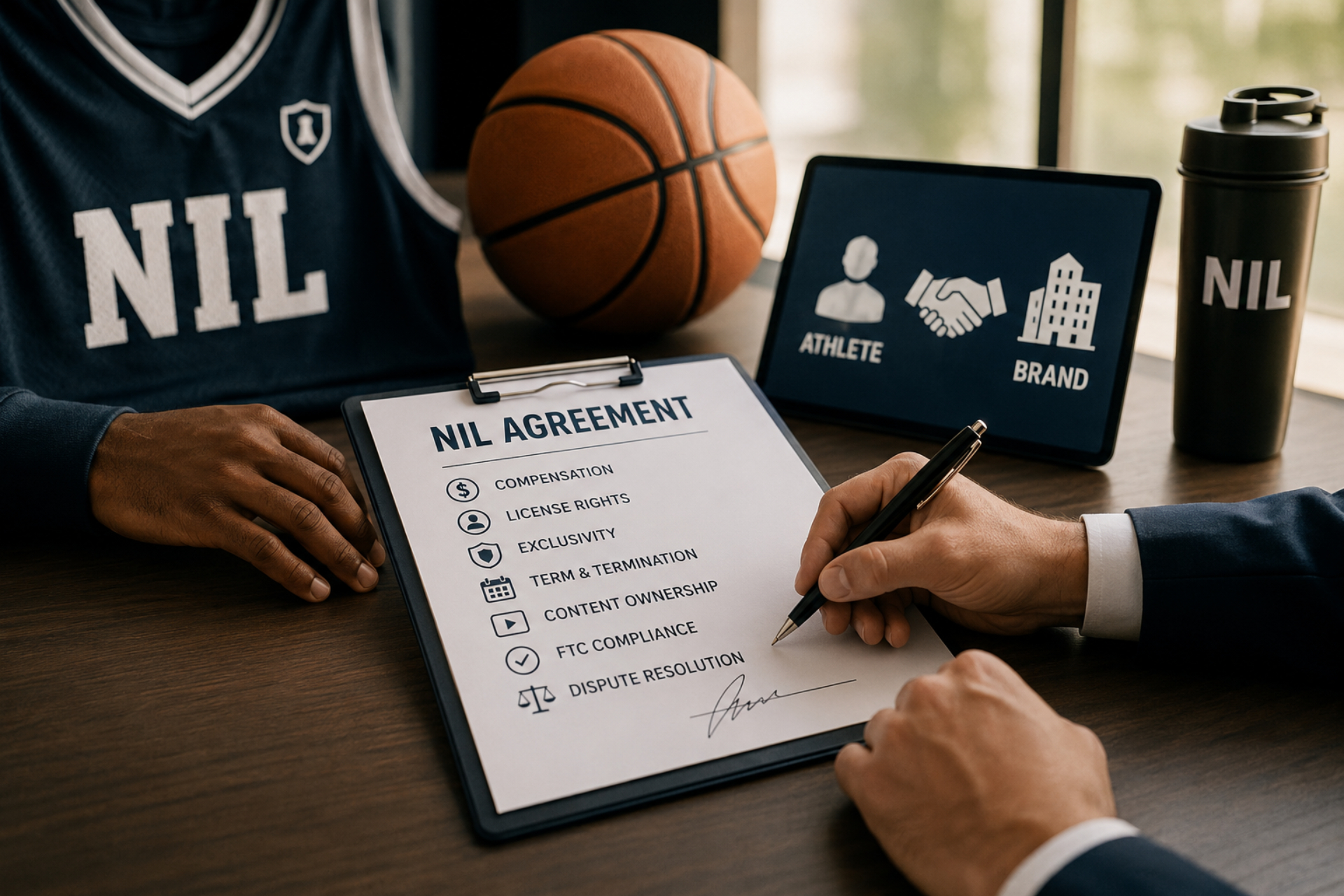
Name, Image, and Likeness (NIL) opportunities have fundamentally changed the business of college athletics, creating new ways for student-athletes to monetize their personal brands through endorsements, sponsorships, social media collaborations, public appearances, licensing agreements, merchandise, and other commercial ventures. What was once prohibited under NCAA rules has evolved into a rapidly expanding marketplace where athletes and businesses regularly enter into agreements that can carry significant financial, legal, and reputational implications.
As NIL partnerships continue to increase in both value and sophistication, a handshake or informal understanding is no longer enough. Every NIL agreement should clearly define each party’s rights, responsibilities, compensation, intellectual property rights, and expectations to help reduce the risk of disputes and protect the long-term interests of everyone involved. A carefully drafted contract not only provides legal protection but also establishes a strong foundation for a successful and mutually beneficial business relationship.
Whether you are a student-athlete considering your first endorsement opportunity, an established athlete negotiating a high-value sponsorship, or a business looking to collaborate with an athlete to promote your products or services, understanding the key provisions of an NIL agreement is essential. Knowing what to negotiate, what obligations you are accepting, and where potential legal issues may arise can help you make informed decisions, safeguard your rights, and position yourself for long-term success in the evolving NIL marketplace.
Compensation
Compensation is one of the most heavily negotiated terms in any NIL agreement. The contract should clearly specify how much the athlete will be paid, when payment will be made, and what performance or promotional obligations must be completed before payment is earned.
From the athlete’s perspective, payment terms should be transparent and include clear deadlines, reimbursement procedures, and any bonuses or incentives. Brands, on the other hand, should ensure that compensation is tied to measurable deliverables, such as social media posts, appearances, or promotional campaigns.
Licensing Rights
NIL agreements typically grant the brand permission to use the athlete’s name, image, likeness, signature, voice, or other identifying characteristics for specific marketing purposes.
Athletes should carefully review exactly what rights they are granting, where the content may be used, and whether the license is exclusive or non-exclusive. Brands should ensure the agreement clearly defines the scope of the license, including permitted media, geographic territory, and duration of use, to avoid future disputes.
Exclusivity
Many brands seek exclusivity provisions that prevent an athlete from promoting competing products or services during the contract term.
Athletes should understand how broadly these restrictions apply. An overly broad exclusivity clause could unintentionally limit future endorsement opportunities. Brands, meanwhile, should tailor exclusivity provisions to legitimate competitive concerns rather than imposing unnecessary restrictions that could discourage athletes from entering into the agreement.
Term and Renewal
Every NIL contract should specify its effective date and expiration date. Some agreements cover a single promotional event, while others may extend for months or even years. Renewal provisions should explain whether the agreement automatically renews or requires mutual consent to continue.
Both parties benefit from clearly defining the duration of the relationship and the circumstances under which it may be extended.
Termination Rights
Business relationships do not always proceed as planned, making termination provisions especially important. An NIL agreement should identify the events that permit either party to terminate the contract, such as material breach, failure to perform, reputational concerns, or changes in applicable laws or athletic eligibility rules.
Athletes should understand whether they must return advance payments or discontinue promotional activities following termination. Brands should ensure they have reasonable remedies if contracted services are not performed.
Content Ownership
Many NIL agreements involve the creation of photographs, videos, written content, or social media posts. The contract should clearly address who owns the content after it is created. In some cases, the athlete retains ownership while granting the brand a license to use the material. In others, the brand may own specific content created as part of the campaign.
Clearly defining ownership and permitted future uses can help avoid disputes after the partnership ends.
FTC Compliance
Both athletes and brands should be aware of applicable advertising laws. The Federal Trade Commission (FTC) requires endorsements to be truthful and generally requires material connections between endorsers and advertisers to be clearly disclosed.
NIL agreements should address each party’s responsibility for complying with applicable advertising and endorsement requirements, including appropriate social media disclosures such as identifying sponsored content when required.
Dispute Resolution
Even carefully negotiated agreements can give rise to disagreements. NIL contracts should establish how disputes will be resolved, whether through negotiation, mediation, arbitration, or litigation.
The agreement should also specify the governing law and the venue where disputes will be heard. Clearly defined dispute resolution procedures can reduce uncertainty and potentially minimize the cost and disruption associated with legal conflicts.
Have Questions About an NIL Agreement? Speak to a Los Angeles NIL Lawyer Today
NIL opportunities can create tremendous value for both student-athletes and the businesses that partner with them, but every opportunity should begin with a carefully drafted agreement. A well-structured NIL contract does far more than outline compensation. It establishes each party’s rights and responsibilities, addresses ownership of valuable intellectual property, defines marketing obligations, protects against unnecessary legal risk, and helps preserve relationships long after a campaign has ended. Investing time in a comprehensive agreement today can help prevent costly disputes tomorrow.
Whether you are an athlete evaluating your first endorsement opportunity, negotiating a multi-year sponsorship, or building your personal brand, understanding the legal implications of an NIL agreement is essential. Likewise, businesses entering into athlete partnerships should ensure their contracts clearly define licensing rights, exclusivity, content ownership, compliance obligations, and termination provisions. A properly negotiated agreement helps both parties move forward with confidence while protecting their respective interests.
At Omni Legal Group, our Los Angeles intellectual property attorneys advise student-athletes, sports professionals, influencers, entrepreneurs, and businesses on NIL agreements and the broader legal issues surrounding intellectual property, branding, licensing, endorsements, and commercial partnerships. We work closely with our clients to negotiate, draft, and review agreements that are tailored to their goals while helping minimize legal and business risks.
Your name, image, and likeness are valuable assets. Make sure every agreement reflects their true value and protects your future.
Contact Omni Legal Group today to schedule a confidential consultation with a Los Angeles NIL lawyer. Call 855.433.2226 to speak with our legal team and learn how strategic legal guidance can help protect your rights, strengthen your negotiating position, and support your long-term success both on and off the field. Visit www.OmniLegalGroup.com to learn more.