Omni Legal Group logo
Omni Legal Group Blog Omni Legal Group Blog
  • ABOUT US
  • SERVICES
    • BUSINESS LAW
      • BUSINESS LITIGATION
      • BUSINESS FORMATIONS/TRANSACTIONS
      • BUSINESS CONSULTANCY
    • PATENTS
      • PATENT FILING
        • DESIGN PATENT
        • UTILITY PATENT
      • PATENT LITIGATION
    • Trademarks
      • TRADEMARK FILING
        • TRADEMARK REGISTRATION
        • TRADEMARK TRANSFERS
        • TRADEMARK SEARCHES
        • INTERNATIONAL TRADEMARKS
      • TRADEMARK LITIGATION
    • copyrights
    • Cyber Law
    • Trade Secret LAW
    • Mediation
  • CONTACT US
    • Los Angeles
    • Beverly Hills
    • Santa Monica
  • RESOURCES
    • VIDEOS
    • Publications
    • Blog
    • HELPFUL LINKS
    • IN THE NEWS
    • FAQ’s
  • Philanthropy
  • ABOUT US
  • SERVICES
    • BUSINESS LAW
    • PATENTS
    • Trademarks
    • copyrights
    • Cyber Law
    • Trade Secret LAW
    • Mediation
  • CONTACT US
    • Los Angeles
    • Beverly Hills
    • Santa Monica
  • RESOURCES
    • VIDEOS
    • Publications
    • Blog
    • HELPFUL LINKS
    • IN THE NEWS
    • FAQ’s
  • Philanthropy
  •  

Home / Articles Posted by Omid Khalifeh ( - Page 34)

Archives

Hasbro Sniffs Out New Way to Trademark Play-Doh

Scientific research has consistently confirmed that olfaction is strongly associated with memories and emotions. As such, the use of this less-exploited sense as a marketing ploy provides an advantage over other crowded channels, such as visual or auditory. Earlier this year, Hasbro filed an application for registration of the scent of its Play-Doh toy modeling compound as a trademark. Trademarks serve to distinguish the products and services of one company from those of a competitor in the minds of consumers. Trademarks are commonly words, designs, or combinations thereof, but other non-traditional trademarks, including scent, have been recognized by the U.S. Patent and Trademark Office. Hasbro’s application describes Play-Doh’s scent as “a unique scent formed through combination of a sweet, slightly musky, vanilla-like fragrance, with slight overtones of cherry, and the natural smell of a salted, wheat-based dough.” The toy company also mailed a container of the putty-like substance for the examiner to smell. In order to be granted registration, Hasbro must prove the scent of Play-Doh is distinctive. The scent mark must be unique from other marks such that consumers have come to recognize that scent as being associated with that company and its goods or services.The evidence may be either direct, including consumer surveys, or indirect, including promotional materials, revenue data, and number of years in use. Hasbro claimed acquired distinctiveness in its application based on 62 years of use, beginning in 1955. Moreover, the scent must be non-functional in that it does not serve a utilitarian purpose. More particularly, the scent cannot be necessary to the use or purpose of the product and cannot affect its cost or quality. In response to the toy company’s application, the USPTO issued an office action finding the use evidence to be insufficient. Additionally, the examiner opined that scent in the context of toy modeling compounds is ubiquitous and does not serve as a source identifier. To overcome these obstacles, Hasbro will need to submit additional evidence of the acquired distinctiveness of Play-Doh’s scent. #omnilegalgroup #trademark #Hasbro #PlayDoh

Read More
Recent Foreign Brand Victories in China Demonstrate Efforts Against Bad Faith Trademark Applications

In the past, the general impression has been that trademark law in China weighed heavily in favor of local companies over foreign brands. This has proven problematic for many global companies due to the fact that the need to think about intellectual property protection in China is an inevitable reality. Then, at the end of last year, Michael Jordan received a rare ruling in favor of a foreign brand in a Chinese court. The basketball legend had sued Qiaodan (Michael Jordan’s Chinese name) Sports in 2012 claiming the local company had built its business around his name and famous jersey number. Holding in favor of Michael Jordan, the court found the Chinese company’s actions evidenced “malicious intent.” New Balance also received a victory in China earlier this year after it sued three Chinese companies which were all using a highly similar logo on shoes it sold under the name “New Boon.” New Balance received a hefty damages award of $1.5 million after the court decided the defendants had damaged New Balance’s business reputation and depleted its market share in China. Additionally, China’s trademark office recently rejected an application for “MUSK & Chinese Characters” for “electrical vehicles,” which was filed by a Chinese individual. It found the application had been filed in bad faith without the authorization of the widely known opponent. Article 7 of the Trademark Law of China provides generally that use and registration of a trademark should follow the principle of good faith. Moreover, Article 44.1 states that if a mark was registered through “fraudulent or other illegitimate means,” the trademark office itself may invalidate the mark or others may bring an action to do the same. Taken together, these laws and recent court rulings indicate China is taking actions against bad faith trademark applications. However, the trademark office remains overwhelmed with applications and examiners do not have sufficient time to perform a proper analysis of each filing. Thus, brand holders seeking international protection of their intellectual property rights must closely monitor the Chinese trademark office. #omnilegalgroup #trademark

Read More
Candy Companies Trademark Shapes and Designs of Halloween Treats

Classic trademarks consist of word or graphic elements or a combination of the two. However, a trademark may consist of colors, sounds, or even shapes of goods. Various candy manufacturers have taken advantage of this by requesting registration of the designs and shapes of their treats as a trademark. For instance, Hershey was granted trademark protection for its classic chocolate bar being described as “a configuration of a candy bar that consists of 12 equally-sized recessed rectangular panels arranged in a four panel by three panel format with each panel having its own raised border within a large rectangle.” The chocolate conglomerate also holds trademarks for the iconic Hershey’s Kiss plume emanating from the top of the candy. Another chocolate maker, Toblerone, has also been successful in trademarking the classic triangular shape of its Swiss chocolate. Nestle, on the other hand, has not been so fortunate as earlier this year, the high court in the UK rejected the candy-maker’s attempt to trademark the four-fingered shape of the Kit Kat bar. In receiving trademark protection, a design or shape must be either “inherently distinctive” or have “acquired distinctiveness,” meaning the public has come to recognize that element as being representative of a particular company. Thus, the shape of a candy bar must be a source identifier. #omnilegalgroup #trademark #halloweencandy #Hershey #Toblerone #Nestle #KitKat

Read More
Kmart Banana Costume Subject of Unap-peel-ing Copyright Lawsuit

Rasta Imposta, a small costume company, sued Kmart for copyright infringement after the retail store discontinued carrying the company’s banana costume. Instead, Kmart switched to another company and Rasta Imposta alleges the current Kmart costume has the same shape, lines, and cutouts of its banana costume. Moreover, the complaint continues, even the model displaying the costume is adorning it in a similar fashion with black pants and dress shoes. Rasta Imposta’s argument relies on a recent Supreme Court ruling on the copyright status of cheerleading uniforms. In that case, the Court held the uniform was eligible for copyright protection to the extent the design elements could be identified separately from the utilitarian aspects of the article. Normally, copyright law granted only limited protection to the design of useful articles such as clothing. Functional aspects of an item, such as holes in the costume for the neck and arms, are not eligible for copyright protection. In contrast, traditional creative works such as books, films, or paintings were granted broader protection. Since Rasta Imposta did not invent how a banana looks in nature nor can it claim protection for the costume’s functional aspects, the question will be whether its banana design adds enough originality over a generic banana costume to justify copyright protection. #omnilegalgroup #copyright #Kmart

Read More
Omni Legal Group’s New Video Series on Intellectual Property

Welcome to the first video in Omni Legal Group’s series on intellectual property law. My name is Omid and I’m a patent attorney and the principal of an intellectual property law firm called Omni Legal Group. We’re here in Silicon Valley at one of Club Sportive’s beautiful California locations to talk about two subjects that are close to my heart: intellectual property and exotic cars. One thing that might surprise you as I open up the hood of this Tesla P100D is that you will find that there is no engine inside. And this brings us to the intellectual part of intellectual property law. The reason why there is no engine under the hood is that the inventors at Tesla have figured out a way to replace the internal combustion engine with a battery. This takes us to the property side of intellectual property. The way these inventors protect their inventions are by filing applications that allow them to put a legal fence around their ideas and establish which inventions are theirs. The reason why we do this is that occasionally people will take the Porsche crest or Cadillac emblem and put them on products that did not originate from Porsche or Cadillac. Using intellectual property law, we can establish how this trespass has taken place and take the necessary legal precautions to make sure that it doesn’t happen again. There are different kinds of intellectual property for protecting different kinds of ideas. Trademarks are used to protect brands like Ferrari, Porsche or McLaren. Patents are used to protect some of their inventions like the amazing engine chassis and suspension designs. We are going to get into all of these in much more detail later on in the series. For now, it is important that you understand that there are differences and we want to make sure you have enough information to make the most informed decisions when it comes to protecting your intellectual property. So whether it be a 500 horsepower rampaging bull or the solution to a thousand year old problem that nobody has thought of before. Whether it is a one hundred year old brand that is steeped in tradition or a startup company you began last week. Our goal is to help you make the most informed decisions when it comes to protecting your intellectual property. I’d like to take this opportunity to thank Club Sportiva for opening their clubhouse to us today. If you’d like to learn more about becoming a member or renting one of these amazing vehicles, visit their website at ClubSportiva.com. I hope you enjoyed this first video of the series. Until next time, I’m Omid with the Omni Legal Group and I’ll see you in the next video.

Read More
Did You Know?

In addition to a host of technical and design patents Apple holds on the technology itself, the company also patents its packaging design. Not only is Apple concerned with how a product fits comfortably inside its box, it also aims to maximize the user experience from the time the consumer picks up the box to when they remove the product. As such, Apple’s boxes appeal to visual and tactile senses alike. When a user moves to lift the lid from an Apple box, one notices how the lid slowly glides apart from the bottom, creating anticipation before the big reveal of their newest toy.  Competitors have also noticed this attention to detail which led to one of Apple’s many lawsuits against Samsung.

Read More
Allergan Finds Loophole in System to Protect Patents from Challengers

Pharmaceutical giant, Allergan, may have found a loophole in the patent system to extend its monopoly over its drug, Restasis. Generic drugmakers sought to invalidate Allergan’s patents on the dry eye medication in order to introduce generic, less expensive versions of the drug to consumers. These companies, led by Mylan, brought suit in district court as well as an inter partes review (IPR) proceeding before the U.S. Patent Trial and Appeal Board (PTAB), a process which makes patent challenges easier and less costly. In order to avoid IPR, which is simultaneously celebrated by patent challengers and loathed by drugmakers, Allergan transferred its patents to the New York Saint Regis Mohawk Tribe. The Tribe’s status as a sovereign nation shields any patents it holds from IPR. In exchange for agreeing to exclusively license the patents back to the drug manufacturer, Allergan is to pay the Tribe $13.75 million upfront then $15 million per year thereafter in royalties. These figures pale in comparison to the $1.5 billion the drug brought in last year alone, accounting for 10% of Allergan’s overall revenues.

There is a concern this tactic could inhibit the entry of more affordable pharmaceuticals into the market. Indeed, four senators have asked the Senate Judiciary Committee to conduct an investigation into the agreement claiming it is “a blatantly anti-competitive attempt to shield its patents from review and keep drug prices high.” However, in a case against the University of Florida earlier this year, it was argued and decided that sovereign immunity applies not only to courts but also to quasi-judicial proceedings managed by the U.S. Patent and Trademark Office. Based on this precedent, Allergan has a solid argument as to the validity of its agreement with the Tribe. The only exception to a tribe’s sovereign immunity is if Congress expressly abrogated it or the tribe itself expressly waives it. Nothing in the Patent Act abrogates such tribal immunity and the Tribe has made it clear they are definitely not waiving their immunity in this situation.

Allergan responded to these concerns by stating the focus need not be on their agreement with the Saint Regis Mohawk Tribe but rather on the IPR process and “its negative impact on life sciences.” In long-term investment strategies, drug manufacturers find comfort in the protection of their patents. The threat of IPR creates significant business uncertainty rendering it far less attractive to expend vast resources to research and develop new pharmaceuticals. The Supreme Court will hear arguments this month as to the constitutionality of IPRs.

Read More
Netflix “Narcos” Trademark Dispute Reignites After New Threats

The year-long trademark dispute between the Escobar family and Netflix reignites after a Netflix scout was found dead after suffering from multiple gunshot wounds in a cartel-dominated area near Mexico City. The location manager was scouting a site for filming “Narcos,” a popular Netflix series, the first two seasons of which chronicle the life of Pablo Escobar from the time he first began manufacturing cocaine through his career as an infamous Columbian drug lord. Escobar is survived by his brother, Roberto De Jesus Escobar Gaviria, who seeks to protect his legacy from alleged intellectual property violations by the streaming service. Pablo Escobar’s brother is the founder of holding company Escobar Inc. that requested $1 billion from Netflix claiming the company has reaped a substantial financial benefit through their use of Escobar’s name and story on the show. Escobar Inc., Escobar’s brother claims, owns the trademarks to all of their names as well as the Narcos brand. He also threatened that if Netflix does not pay the requested compensation, he would “close their little show.” Moreover, he cautioned Netflix (or any other film production company) against filming anything in Colombia related to the Escobar family without the consent of Escobar Inc. Alternately, he suggested the show consider hiring hitmen as security for its film crew. #omnilegalgroup #trademark #Netflix

Read More
Apple Indoor Location Mapping Patent

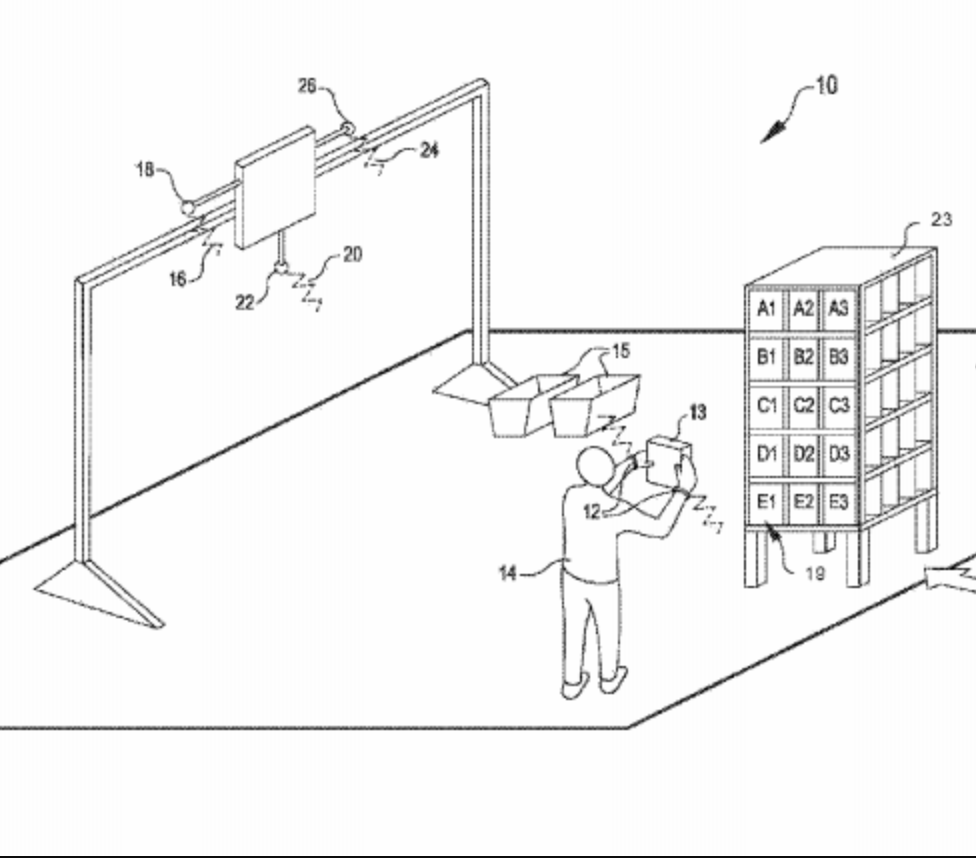
Among 57 patents issued this week to Apple, one involves techniques for creating a location fingerprint within a venue. While GPS is a common feature to any mobile device, when enclosed within a structure, the signal may be outside of the line of sight with GPS satellites, resulting in a greater margin for error. The new technology, known as indoor location mapping, distinguishes itself through its ability to generate a location map inside a building or tunnel. Apple’s iOS 11 harnesses this invention and Apple Maps is now supported at major malls and airports around the world. Through this technology, any app utilizing location will be able to deliver its services indoors. #omnilegalgroup #patent #Apple

Read More
Wrigley Trademark

Wrigley, well known for their assortment of chewing gums, has filed suit to enforce their intellectual property rights in the JUICY FRUIT mark. In a trademark infringement action brought in the US District Court of the Northern District of Illinois this past Friday, Wrigley accused the owner of an electronic cigarette company selling Juicy Fruit e-liquids of violating their registered United States Trademarks. Mohammed Ghatala, owner of Dreamecore Enterprise, failed to reply to two cease-and-desist letters from the American gum maker and could now face injunctive action and a recall of the allegedly infringing products. Just last year, Wrigley sued another electronic cigarette company named Chi Town Vapes for infringing their DOUBLEMINT and JUICY FRUIT marks. #omnilegalgroup #trademark #Wrigley

Read More

About Omni Legal Group

omni
The Omni Legal Group was founded in Los Angeles, California by Omid Khalifeh.

We Are Social

The Great IDEA Newsletter

The Great IDEA: Twitter and the Law How to avoid getting in Twouble Twitter makes it easy for users communicating to large audiences over the Internet. There's very little preparation that needs to go into what you're going to say and in seconds you can conceivably communicate your message to millions of people. Read More
  The Great IDEA: Apple Awarded Sexting Patent As technology increases our access to limitless information so does the need for parental controls on advanced devices. Clearly recognizing this need, Apple was recently awarded a patent for a "Text-based communication control for personal communication device." Read More

PATENT & TRADEMARK LAW FIRM

FREE CONSULTATION

Call us for support
310-276-6664

Latest Posts

Do You Need a Patent Before Pitching Investors? What California Founders Should Know
By Omid Khalifeh Jun 12, 2026
What Every College Athlete Should Know About NIL Rights Before Signing a Deal
By Omid Khalifeh May 29, 2026
Top Legal Mistakes Athletes Make in NIL Agreements (And How to Avoid Them)
By Omid Khalifeh May 28, 2026
Can Someone Use Your Name or Image Without Permission? Understanding NIL and Publicity Rights
By Omid Khalifeh May 22, 2026
Using Athlete NIL in Marketing: Legal Guidelines for Businesses
By Omid Khalifeh May 20, 2026

Posts pagination

« 1 … 33 34 35 … 38 »
SERVICES
  • Patents
  • Trademarks
  • Copyrights
  • Cyber Law
  • Trade Secret Law
  • Business Consultancy
  • Mediation
CONNECT WITH US

logo

855.433.2226

info@omnilegalgroup.com

OFFICE LOCATIONS

Los Angeles
2029 Century Park East, Suite 400,
Los Angeles, CA 90067.
Tel: 310.860.2000
Beverly Hills
9025 Wilshire Blvd., Suite 500,
Beverly Hills, CA 90210.
Tel: 424.901.8418
Santa Monica
2425 Olympic Blvd., #4000,
Santa Monica, CA 90404.
Tel: 310.276.6664
BUSINESS HOURS
Monday - Sunday: 9 AM to 5 PM

ABOUT USSERVICESCONTACT USRESOURCESPHILANTHROPY

Copyright 2026 Omni Legal Group - Patent & Trademark Law Firm in Los Angeles