
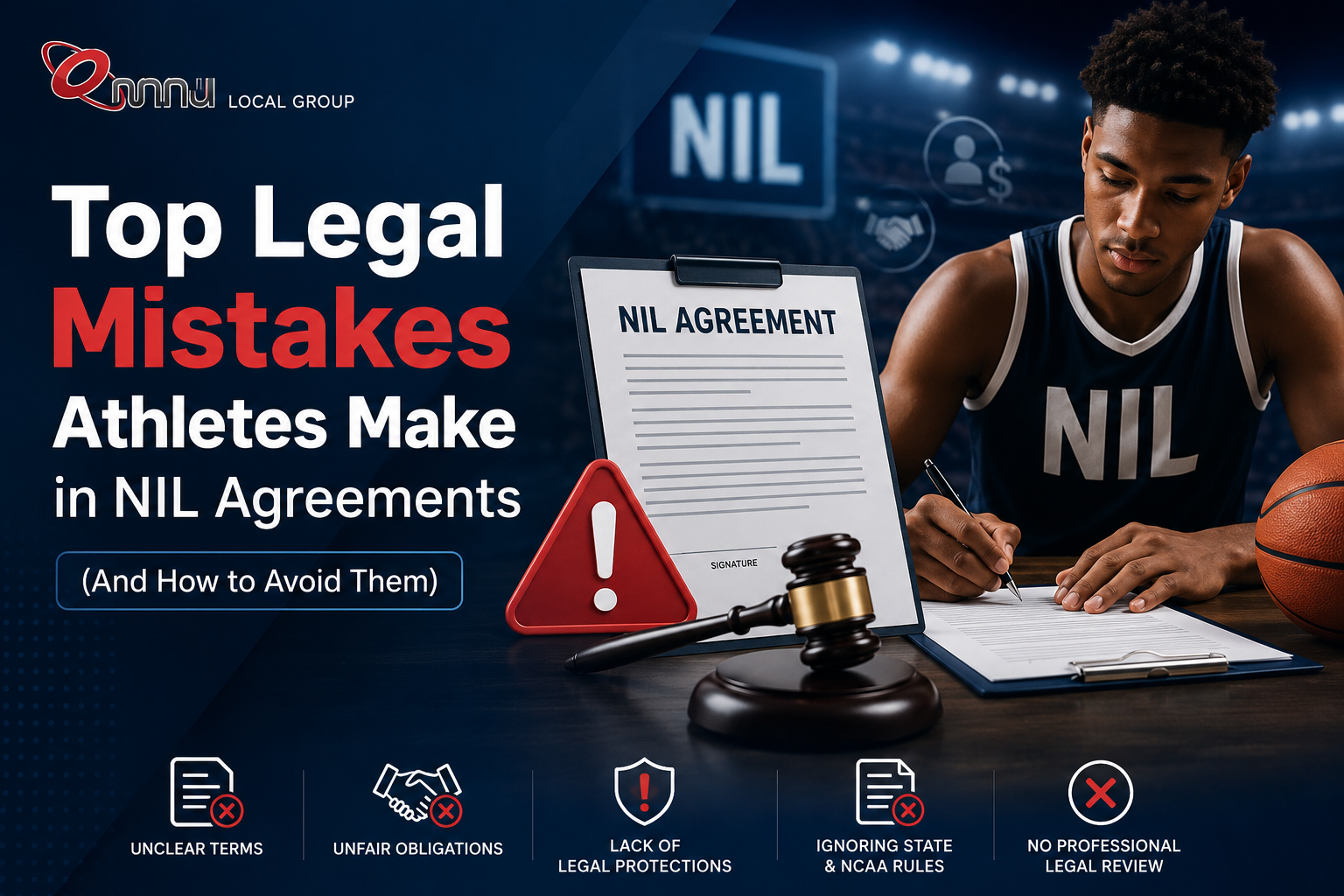
The landscape of Name, Image, and Likeness (NIL) has completely reshaped collegiate athletics, transforming student-athletes from amateur competitors into powerful personal brands with real commercial value. In today’s digital economy, athletes are no longer limited to earning opportunities after turning professional. Through sponsorships, endorsements, social media partnerships, licensing deals, and branded content, college athletes can now monetize their identity while still competing at the collegiate level. Nowhere is this shift more visible than in Los Angeles, where sports, entertainment, influencer culture, and business opportunities frequently intersect.
With these opportunities, however, comes a new level of legal and financial complexity that many athletes are unprepared to navigate. NIL agreements are often presented as “standard” contracts, but in reality, many contain aggressive provisions that can impact an athlete’s future earnings, brand control, transfer options, and long-term professional opportunities. A poorly negotiated agreement signed today can create lasting consequences long after the original sponsorship deal ends.
At Omni Legal Group, we have seen a growing number of athletes unknowingly sign contracts that heavily favor brands, agencies, or sponsors. From overly broad exclusivity clauses and perpetual usage rights to vague deliverables and hidden liabilities, these agreements can significantly limit an athlete’s flexibility and future value. Protecting your name, image, and likeness is not just about securing a deal, it is about protecting the business and long-term potential tied to your personal brand. Before signing any NIL agreement, athletes should understand the legal risks involved and take proactive steps to avoid the following common pitfalls.
The “Perpetual Rights” Trap
One of the most dangerous clauses we see is the grant of rights “in perpetuity.” This means the brand can use your name and image forever, even after you’ve gone pro or retired, without ever paying you another dime. This is why you should emphasize negotiating a fixed term (the duration of the deal) and an exhaustion period.
Overly Broad Exclusivity
Exclusivity is common, but it must be narrowly tailored. If you sign an agreement with a local car dealership that prohibits you from working with any “transportation company,” you might be legally barred from a much larger deal with an airline or a ride-sharing app later. You can help avoid this issue by ensuring non-compete clauses are specific to a product category (e.g., “domestic trucks”) rather than an entire industry.
Vague Deliverables and “Scope Creep”
Does the contract ask for “regular social media posts,” or does it specify “two 30-second TikTok videos and one Instagram carousel per month”? Vague language leads to “scope creep,” where a brand demands more of your time without additional pay.
You can help avoid this issue by defining the deliverables with surgical precision. Include the platform, format, length, and the number of allowed revisions.
Ignoring Tax and “In-Kind” Liabilities
Many athletes forget that NIL income is taxable. Even worse, non-cash compensation, like a free car lease, expensive apparel, or high-end equipment, is considered taxable income at its fair market value. If you receive $10,000 worth of gear, the IRS expects a cut of that value in cash.
You can help avoid this issue by setting aside roughly 25-30% of all cash earnings for taxes and keep meticulous records of all “free” products received.
Transfer Portal and Eligibility Conflicts
California law provides robust protections for athletes, but NCAA rules and school-specific policies still apply. Some NIL contracts include “loyalty” clauses that penalize you or require you to pay back money if you enter the transfer portal.
You can take actions to avoid this issue by ensuring your contract includes a “compliance clause” stating that the agreement is void or adjustable if it conflicts with evolving NCAA regulations or your school’s athletic department policies.
Why Legal Review is Essential
One of the biggest mistakes an athlete can make is assuming a contract is “standard.” In the NIL world, basically every provision in an agreement is negotiable. A professional legal review ensures that you aren’t just signing a deal for today but protecting your identity for tomorrow.
Before you sign on the dotted line, make sure you retain the services of a knowledgeable Los Angels business lawyer who understands the intersection of California contract law and sports regulations.
Have Questions About an NIL Agreement? Protect Your Brand Before You Sign Anything
NIL opportunities can create life-changing financial and branding opportunities for athletes, but the wrong contract can also create long-term legal and financial problems that are difficult to undo. Many NIL agreements contain complex language involving exclusivity rights, licensing terms, content ownership, compensation structures, renewal provisions, and restrictions that may impact future sponsorships, transfer opportunities, or even professional career options. What may appear to be a simple endorsement deal today can carry significant consequences for your future earning potential and personal brand.
Athletes should never assume a contract is “standard” simply because it comes from a recognizable company, agency, or sponsor. In reality, many NIL agreements are heavily drafted to protect the brand, not the athlete. Without proper legal review, athletes may unknowingly give away long-term rights to their name, image, likeness, social media content, or future commercial opportunities for far less than those rights are worth.
At Omni Legal Group, our Los Angeles business and intellectual property attorneys help athletes, influencers, creators, and entrepreneurs navigate the rapidly evolving NIL landscape with clarity and confidence. We work closely with clients to review NIL contracts, negotiate endorsement agreements, analyze exclusivity provisions, protect publicity rights, and develop long-term strategies designed to strengthen and preserve personal brand value.
Your NIL rights are not just part of your athletic career; they are part of your long-term business future.
Before you sign away valuable rights, make sure you fully understand what is at stake.
Contact Omni Legal Group today to schedule a confidential strategy session with a Los Angeles business lawyer. Call 855.433.2226 to speak directly with our legal team and take proactive steps toward protecting your brand, your opportunities, and your future earning potential. To learn more, visit www.OmniLegalGroup.com.