Omni Legal Group logo
Omni Legal Group Blog Omni Legal Group Blog
  • ABOUT US
  • SERVICES
    • BUSINESS LAW
      • BUSINESS LITIGATION
      • BUSINESS FORMATIONS/TRANSACTIONS
      • BUSINESS CONSULTANCY
    • PATENTS
      • PATENT FILING
        • DESIGN PATENT
        • UTILITY PATENT
      • PATENT LITIGATION
    • Trademarks
      • TRADEMARK FILING
        • TRADEMARK REGISTRATION
        • TRADEMARK TRANSFERS
        • TRADEMARK SEARCHES
        • INTERNATIONAL TRADEMARKS
      • TRADEMARK LITIGATION
    • copyrights
    • Cyber Law
    • Trade Secret LAW
    • Mediation
  • CONTACT US
    • Los Angeles
    • Beverly Hills
    • Santa Monica
  • RESOURCES
    • VIDEOS
    • Publications
    • Blog
    • HELPFUL LINKS
    • IN THE NEWS
    • FAQ’s
  • Philanthropy
  • ABOUT US
  • SERVICES
    • BUSINESS LAW
    • PATENTS
    • Trademarks
    • copyrights
    • Cyber Law
    • Trade Secret LAW
    • Mediation
  • CONTACT US
    • Los Angeles
    • Beverly Hills
    • Santa Monica
  • RESOURCES
    • VIDEOS
    • Publications
    • Blog
    • HELPFUL LINKS
    • IN THE NEWS
    • FAQ’s
  • Philanthropy
  •  

Blog Old

Home / Blog Old - Page 25

Our Latest News

Does a legendary artist’s creation of 16 artworks known as the “Prince Series” constitute fair use of a 1981 picture taken by renowned photographer Lynn Goldsmith?
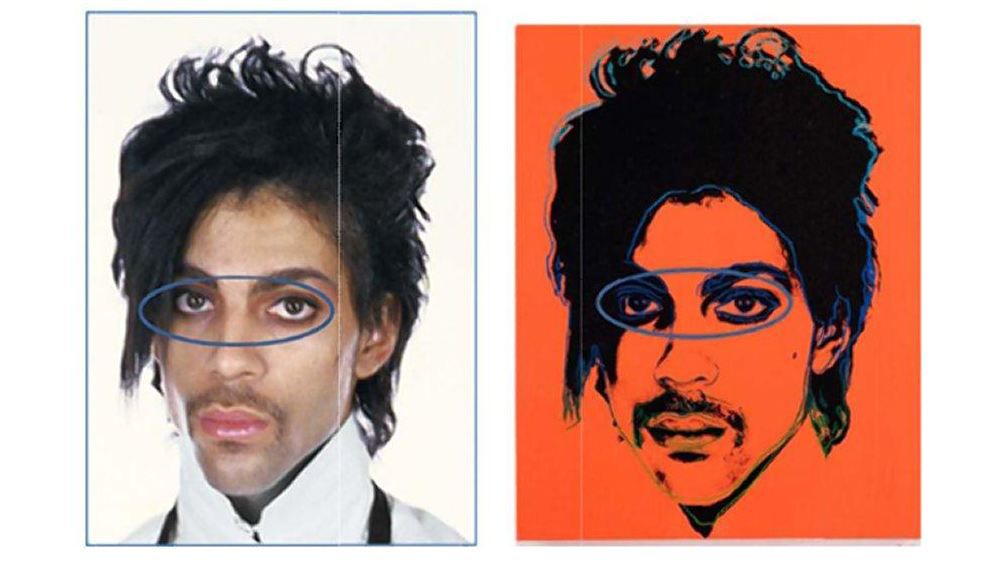
On July 1, 2019, Justice John G. Koeltl from the United States District Court for the Southern District of New York issued the Opinion and Order. In the Opinion and Order, the Court finds that Andy Warhol’s “Prince Series” constitutes fair use and does not infringe Lynn Goldsmith’s copyright over the Goldsmith Prince Photograph.

Andy Warhol is one of the most celebrated American artists of the 20th Century. Warhol created works about widely circulated images of celebrities, and everyday items such as Campbell’s soup cans and Brillo pads. Museums and universities across the globe display his works which are viewed by millions of people. In 1984, Warhol created a series of portraits of world famous singer Prince Rogers Nelson, commonly known as “Prince.” The portraits reference Lynn Goldsmith’s, a famous rock and roll photographer, photograph of Prince taken in 1981 (“Goldsmith Prince Photograph”).

On April 7, 2017, the Andy Warhol Foundation for the Visual Arts, Inc. (“Foundation”) filed a complaint against Lynn Goldsmith and Lynn Goldsmith, Ltd. seeking a declaratory judgment that (1) the portraits in Warhol’s “Prince Series” do not infringe upon Goldsmith’s copyright in the photographs, (2) the portraits are transformative or are otherwise protected by fair use, and (3) Goldsmith’s claims are barred by the statute of limitations and the equitable doctrine of laches.

On June 9, 2017, Goldsmith filed a counterclaim for copyright infringement against Warhol’s “Prince Series,” specifically against the portrait appearing on the 1984 Vanity Fair publication which was newly published with color by Condé Nast on the cover of a May 9, 2016, special Prince tribute magazine. Per the counterclaim, in 1984, Vanity Fair’s photo department solicited Goldsmith for submission of one of the Prince images from her 1981 Newsweek photo shoot, which Warhol ultimately illustrated. The agreement between Goldsmith and Vanity Fair included that the Goldsmith Prince Photograph was for a one-time use. The counterclaim provides that Condé Nast created and released the 2016 Publication as a special tribute issue to Prince’s life, using for its cover a different color version of the same image Warhol created for Vanity Fair in 1984, based on Goldsmith’s 1981 photo. Condé Nast licensed the image from the Foundation and not Goldsmith. The counterclaim alleges Warhol commercially used the Goldsmith Prince Photograph without Goldsmith’s permission on several occasions.

Copyright refers to an author’s right to control the use of their work for a limited period of time. Copyright protection arises under federal law and is codified under Title 17 of the United States Code. Copyright law protects literary, musical, dramatic, choreographic, pictoral, graphic and sculptural works, motion pictures and other works. Original works, fixed in a tangible medium of expression, are eligible for copyright protection. Under the 1976 Copyright Act, the copyright owner has the exclusive right to reproduce, adapt, distribute, publicly perform, and publicly display the work. A copyright owner may transfer, license, sell, donate, or bequeath their rights. Depending on the work, Copyright protections last anywhere from 70 years after the author’s death to 120 years from the work’s creation. Although original works fixed in a tangible medium of expression receive immediate copyright protection, registration with the federal government allows copyright owners to file copyright infringement claims against infringers.

Copyright infringement occurs when a copyrighted work is reproduced, distributed, performed, publicly displayed, or made into a derivative work without the permission of the copyright owner. To prevail, a plaintiff must prove its ownership of a valid copyright and a copying of elements of the work that are original.

Fair use is a codified legal doctrine under Section 107 of the Copyright Act and functions as a statutory exception to copyright infringement. Fair use limits the protections offered by copyright law by ensuring copyright law does not encroach upon the public’s freedom of expression. Fair use limits copyright law by permitting use of copyrighted works by the public under certain circumstances. The Copyright Act lists the following four factors for determining fair use: (1) the purpose and character of the use; (2) the nature of the copyrighted work; (3) the amount and substantiality of the portion used in relation to the copyrighted work as a whole; and (4) the effect of the use upon the potential market for or value of the copyrighted work.

The first factor considers whether the secondary work “is of commercial nature or is for nonprofit educational purposes.” The most important consideration under the first factor is the “transformative” nature of the work at issue. Generally, the more transformative the new work, the less will be the significance of other factors. In the Opinion and Order, the Court finds that the first factor favors the Foundation, holding that the works in the “Prince Series” are transformative of the Goldsmith Prince Photograph because the “Prince Series” “have a different character, give the Goldsmith Prince Photograph a new expression, and employ new aesthetics with creative and communicative results distinct from Goldsmith’s.” Specifically, all but one of the works in the “Prince Series” remove Prince’s torso and bring his face and neckline to the forefront. Additionally, the “Prince Series” depicts Prince as two-dimensional and uses loud unnatural colors.

The second factor calls for recognition that some works are closer to the core of intended copyright protection than others, with the consequence that fair use is more difficult to establish when the former works are copied. Courts consider whether the copyrighted work is (1) creative or factual and (2) unpublished versus published. Here, the Court finds that the second factor favored neither the Foundation nor Goldsmith stating that although unpublished works enjoy additional protection against fair use, this bears little weight on the case because Goldsmith licensed her photograph to Vanity Fair.

The third factor considers whether the quantity and value of the materials used are reasonable in relation to the purpose of the copying. The Court finds that although Warhol initially used Prince’s head and neckline as they appear in the Goldsmith Prince Photograph, Warhol removed nearly all protectable elements from the Goldsmith Prince Photograph, such as Prince’s crude and creative facial features which evoked the desired expression. Thus, the Court finds that the third factor favors Warhol.

The fourth factor considers the effect of the use upon the potential market for or value of the copyrighted work. This factor focuses on whether the alleged infringing work “usurps” the market or derivative markets for the original work. The Court finds that the fourth factor favors Warhol because the “Prince Series” works and the Goldsmith Prince Photograph are not market substitutes and do not harm Goldsmith.

The Opinion and Order concludes the action.

Read More
Can a popular yoga-inspired apparel company enforce its intellectual property rights against a discount retail chain store?

On June 20, 2019, upscale Canadian yoga-inspired apparel company, Lululemon Athletica, filed a lawsuit in the United States District Court for the Northern District of California alleging federal trademark infringement, federal trademark counterfeiting, and both federal and state unfair completion claims against discount retailer Ross Stores, Inc. and its athletic apparel supplier, Impulse Off Price Apparel (“IOPA”), for importing and selling cheap counterfeit copies of Lululemon’s high-end leggings.

As known by many fans and consumers, Lululemon is a leading designer and retailer of high-quality, yoga-inspired athletic apparel.  The Canadian athletic apparel company founded in 1998 develops, manufactures, and sells premium apparel including shirts, shorts, pants, and leggings along with other products such as yoga mats, bags, and accessories.  Per the complaint, Lululemon’s products are designed to offer performance, fit, and comfort while incorporating both function and style, which allow Lululemon to address the needs of athletes and consumers. Lululemon’s products all bear its distinctive trademarks.

The complaint provides that Lululemon owns and widely promotes several trademarks which have earned substantial fame and considerable goodwill among the public.  Lululemon’s registered trademarks include registration nos. 4391115, 4367598, 2607811, 2460180, 4345516, 5393854, which include marks for “LULULEMON” and the “Upside-Down U Seam.”  The complaint provides that Lululemon’s Trademarks attributed to its high level of brand recognition and that as a result of Lululemon’s longstanding and widespread use and promotion of the Lululemon trademarks, Lululemon’s customers worldwide have come to rely upon Lululemon’s trademarks to identify its high-quality goods and services.  

In March 2019, Lululemon representatives bought 20 counterfeit leggings from Ross Stores, Inc. operated dd’s DISCOUNTS stores in San Leandro and Hawthorne for $7.99 each.  Lululemon’s All the Right Places Plant II and Fast & Free Tight usually retail for $128 each.  Per the complaint, Lululemon representatives analyzed the counterfeit leggings and determined that the counterfeit leggings were among the lowest-quality counterfeit leggings.  Lululemon makes their famous All the Right Places Pant II and Fast & Free Tights using smooth, four-way stretch Full-On Luxtreme fabric and Lululemon’s Nulux quick-drying, seat-wicking fabric.  Unlike the four-way stretch Full-On Luxtreme fabric and the Nulux quick-drying fabric which compose Lululemon’s products, thin inexpensive polyester blends compose the counterfeit leggings. 

The complaint alleges that Ross Stores, Inc. and IOPA imported, advertised, distributed, and sold at least 1,000 counterfeit leggings to consumers and retailers, and that Ross Stores, Inc. and IOPA were aware of or willfully blind to the fact the leggings were counterfeit.  Lululemon supports its allegation that Ross Stores, Inc. and IOPA were aware of or willfully blind to the fact that the leggings were counterfeit due to the difference in quality between the counterfeit and original Lululemon leggings.  Lululemon claims that Ross Stores, Inc. and IOPA know that Lululemon only sells its products through its website, outlet stores, and strategic partners such as premium yoga studios, gyms, and wellness centers.  

The complaint further alleges that IOPA imported counterfeit leggings bearing marks identical or substantially indistinguishable from Lululemon’s trademarks.  Lululemon claims Ross Stores, Inc. and IOPA confused consumers through selling counterfeit leggings branded with identical or substantially indistinguishable trademarks from Lululemon’s trademarks.  In support of its allegation, Lululemon identifies social media posts indicating consumers actually believed they purchased authentic Lululemon leggings from dd’s DISCOUNTS.

The lawsuit includes federal trademark infringement, federal trademark counterfeiting, and federal and state unfair completion claims against Ross Stores, Inc. and IOPA.  

To succeed on its trademark infringement claim, Lululemon needs to demonstrate that it has valid and subsisting trademark rights in its “LULULEMON ATHLETICA” (U.S. reg. no. 2607811), Lululemon logo (U.S. reg. no. 2460180), and “LULULEMON” (U.S. reg. no. 4391115) trademarks and that the counterfeit leggings use a mark that is confusingly similar thereto. In other words, Lululemon needs to demonstrate that the use is likely to confuse a consumer regarding the source and origin of the leggings sold in the discount retailers, and is likely to cause confusion or mistake and to deceive purchasers as to Lululemon’s affiliation, connection, or association with, or approval or sponsorship of the counterfeit leggings.

To succeed on its trademark counterfeiting claim, Lululemon needs to demonstrate that Ross Stores, Inc. and IOPA intentionally used the counterfeit marks in commerce while knowing the marks were counterfeit.  Lululemon also needs to demonstrate that Ross Stores, Inc. and IOPA used the counterfeit marks in connection with the sale, offering for sale, or distribution of the alleged counterfeit leggings, and that this use was like to confuse or deceive consumers regarding the source and origin of the leggings sold in the discount retailers.

To succeed on both the federal and state unfair competition claims, Lululemon must establish that it holds valid and subsisting trademark rights in its trademarks.  Additionally, Lululemon must establish that the use of the marks on the counterfeit leggings is likely to cause consumer confusion with respect to the source and origin of the leggings, and with respect to Lululemon’s affiliation with the counterfeit leggings.

Lululemon seeks a court order prohibiting Ross Stores, Inc. and IOPA and their agents, servants, employees, and any related persons or entities acting in concert with them from unlawfully using and/or counterfeiting the Lululemon trademarks or any marks confusingly similar to the Lululemon trademarks.  Lululemon also seeks an order requiring Ross Stores, Inc. and IOPA to destroy the remaining counterfeit leggings.  Naturally, Lululemon seeks damages to the fullest extent available under the law.

Read More

Can trademark law protect “instantly identifiable” fragrances such as Le Labo’s Santal 33?

Unfortunately for fragrance connoisseurs and veterans such as Eddie Roschi and Fabrice Penot, founders of the world-famous Le Labo’s Santal 33 fragrance, trademark law does not offer protections against copycats.  Although consumers often “instantly” link the scent to a brand as they would “instantly” link a brand name to a brand, trademark law does not protect scents in the same way as it protects name brands.

In 2006, Eddie Roschi and Fabrice Penot, fragrance connoisseurs and veterans, founded Le Labo in New York.  The founders met while working together for Giorgio Armani’s perfume division.  Since its inception in 2006, the world-famous fragrance maker expanded to more than 50 locations across the globe.  As of November 3, 2014, Le Labo operates as a subsidiary of The Estée Lauder Companies Inc.  Le Labo separates itself from prestige brands that often spend in excess of tens of millions of dollars in marketing efforts, by focusing its marketing efforts into niche markets.

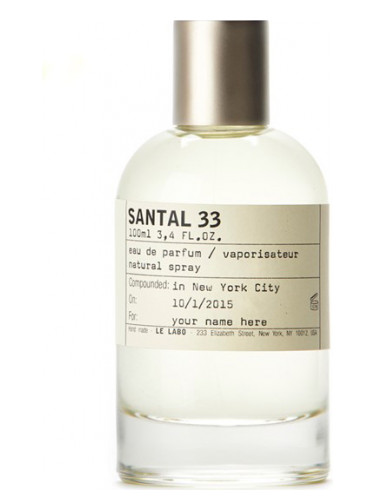
Perhaps Le Labo’s best know scent is its distinct and popular fragrance, Santal 33.  According to the New York Times, Santal 33 began “as an antipode to mass-market scents.”  The widely popular $180 unisex fragrance is a particular, distinctly musky scent, that combines aromas of leather and sandalwood.  Although Santal 33’s scent creates an instant link to Le Labo in the minds of many consumers, the scent is unable to receive protection under trademark law.

Trademark law protects a wide variety of subject matter.  Very generally, any symbol or device that serves to identify and distinguish both the goods and the source of an entity’s goods from those of another is eligible for trademark protection.  The trademark functionality doctrine limits the extent of trademark law.

The trademark functionality doctrine prevents perfumes, fragrances, and scents such as Santal 33 from being protected by trademark law.  The functionality doctrine prevents trademark law from inhibiting market competition because it allows for control over useful product features.  Under the Lanham Act, a trademark which comprises any matter, that as a whole, is functional, is prohibited from trademark registration.  In other words, trademark law does not protect purely functional trademarks.  Trademark law only protects non-functional and source-identifying trademarks.  Under the functionality test, a product feature is functional, and cannot serve as a trademark, if it essential to the use or purpose of the product or if it affects the cost or quality of the product.  The two general types of functionality are utilitarian functionality and aesthetic functionality.

Utilitarian functionality provides that a product feature is functional if it serves a utilitarian purpose.  In Trafix Devices, Inc. v. Marketing Displays, Inc., the United States Supreme Court held that a product feature is functional “when it is essential to the use or purpose of the device or when it affects the cost or quality of the device.”  Accordingly, where a product requires a product feature to optimally function, that product feature may not be protected by trademark law.  

Aesthetic functionality provides that a product feature is functional if it constitutes the actual benefit that the consumer wishes to purchase, as distinguished from an assurance that a particular entity made, sponsored, or endorsed a product.  For example, a candy box in the shape of a heart may be functional because a consumer may wish to purchase it because of its significance as a gift to a loved one or a significant other.  In contrast, a box without a distinct shape and perhaps only a ribbon surrounding it may not be functional.  In recent years, courts adopted a test for aesthetic functionality which asks whether the allegedly functional design is “necessary to effective competition” between competitors.

Accordingly, this may appear as if trademark law does not protect any scents.  However, this is not the case.  The United States Patent and Trademark Office allows for trademark law protection over scents because scents are not explicitly excluded by the Lanham Act.  In order to be protected by trademark law, a scent must be inherently distinctive or its distinctive nature can be acquired through association of the scent with the scent’s producer.  Practically speaking, this requires those seeking trademark protection for scents to provide substantial proof to prove that a scent is distinctive.  Forms of such proof may include, statements from industry dealers or retailers, advertising evidence, brochures, and advertising expenditures.

Last year, Hasbro the internationally renown toy company and the creator of the iconic Play-Doh, received trademark protection for its distinct Play-Doh smell, which it describes as a unique scent formed through the combination of a sweet, slightly musky, vanilla-like fragrance, with slight overtones of cherry, and the natural smell of a salted, wheat-based dough.  Additional scents protected by trademark law include Verizon’s flowery musk scent used in its retailer stores, Grendene’s bubble gum scent used for shoes and flip-flops,  Manhattan Oil’s cherry, grape, and strawberry scents used in connection with lubricants for land and water vehicles, Le Vian’s chocolate scent used in its retail locations, Eddy Finn Ukulele Co.’s piña colada scent used to coat ukuleles, Flip Flop Shop’s coconut suntan oil scent used in its retail locations, Lactona’s strawberry toothbrushes, and Hisamitsu Pharmaceutical Co.’s “minty” pain-relief patches.  

Unfortunately for Le Labo and other fragrance manufacturers, scents that serve a utilitarian purpose cannot be registered as trademarks, even though the scents have acquired distinctiveness.  In other words, these fragrances serve the function of making the consumer smell better, and thus cannot be registered as trademarks and receive protection under trademark law.  Although trademark law may not protect scents such as Santal 33, patent law and trade secret law may do so.

Read More

Can an inventor patent a dog-power machine that provides enough power to operate a range of small machinery?

On June 7, 1859, inventor Dexter C. Slater patented a device for using “dog-power” to power a wide-range of small machinery (U.S. Patent No. 24,338).  As silly as such an invention may seem in today’s technologically driven world, Mr. Slater’s invention was not unique in its time.  In the 19th century, a period when dogs were not only “man’s best friend”, but also diligent workers, inventors patented devices and methods for using “dog-power” to operate machinery.  Inventions similar to Mr. Slater’s device include Heinrich Feldt’s dog-powered sewing machine and H.M. Childs’ dog-powered butter churn.

U.S. Patent No. 24,338 describes a device made from an inclined head wheel, shaft, cam, and lever, all arranged and combined in a manner shown by the picture above.  The patent also describes the device as extremely simple that anyone familiar with tools may construct.  It further describes that a dog operates the device by walking on the wheel.  Specifically, a dog rotates the wheel by walking around the wheel.  The wheel’s rotation rotates a cam that creates a vibrating motion, and that is transferred to a lever.  The resulting “dog-power” is harnessed from the lever.

A patent refers to an inventor’s exclusive right granted for an invention.  Specifically, a patent is a property right that allows an inventor to prohibit, or exclude, others from making, using, selling, or offering for sale or importing the patented invention.  An inventor’s patent is protected by the Article 1, Section 8, Clause 8 of the United States Constitution that provides  Congress with the power to, “to prompt the progress of science and useful arts, by securing for limited times to authors and inventors the exclusive right to their respective writings and discoveries.”

In order for an inventor to patent an invention, the invention must be subject matter eligible, new, useful, and non-obvious.  Additionally, the invention may not be an abstract idea, a law of nature, or natural phenomena.  Subject matter eligible inventions include machines, processes, articles of manufacturing, and compositions of matter as provided under Section 101 of the Patent Act.  An invention is new, or novel, if certain public disclosures of the invention have not been made prior to the inventor applying for a patent.  In order for an inventor to patent an invention, the invention must serve a useful purpose.  This requirement is usually easily satisfied.  Finally, an invention is non-obvious if the invention would have been obvious “to a person having ordinary skill in the art to which the claimed invention pertains.”  Practically speaking, a patent examiner determines whether an invention meets this requirement by asking whether the invention would have been obvious to a person having ordinary skill in the type of technology used in the invention.  In 2007, the U.S. Supreme Court increased the difficulty in satisfying the non-obvious requirement holding that the “person having ordinary skill in the art to which the claimed invention pertains” possesses an ordinary level of creativity.  

The United States Patent and Trademark Office (USPTO) grants patent rights to an inventor according to the invention’s subject matter.  The USPTO may issue six different patent types.  The six different types include reissue patents, defensive publications, statutory invention registrations, utility patents, design patents, and plant patents.  The three most common types of patents are utility patents, design patents, and plant patents.

A utility patent protects an invention for a new and useful machine, process or method, article of manufacture, composition of matter, or a new and useful improvement thereof.  A utility patent protects the functional aspects of an invention.  A utility patent is the most common type of patent issued by the USPTO and usually lasts for twenty years from its filing date.  In order for a utility patent to remain valid for the entire twenty-year period, the inventor, or patent holder, is required to pay maintenance fees to the USPTO.

A design patent protects an invention’s aesthetics, or in other words, ornamental features, of an invention.  Design patents differ from utility patents because they only protect the invention’s aesthetic features, and do not protect the functional aspects of an invention.   A design patent lasts for fifteen years from date the design patent is granted.  A design patent holder is not required to pay maintenance fees to the USPTO in order for the design patent to remain valid for the entire fifteen-year period.

A plant patent protects an invention for a new variety of plant, excluding a tuber propagated plant or a plant found in an uncultivated state.  A plant patent protects cultivated sports, mutants, hybrids, new seedlings, algae, and macro fungi.  A plant patent is unique because in addition to discovering the plant, the inventor must also asexually reproduce the plant.  A plant patent lasts for twenty years from its filing date.  Unlike utility patents, plant patents do not require maintenance fees to remain valid for the entire twenty-year period.

Generally, anyone from anywhere can apply for a patent to protect their invention.  In order to receive a patent, an inventor must file a U.S. patent application with the USPTO.  Once an inventor files a patent application, a USPTO patent examiner prosecutes the application.  Prosecution refers to a process during which a patent examiner examines the application to confirm that the patent application conforms with various requirements.  After examining the application, the examiner either accepts the application and issues a patents, issues an objection, or issues a rejection of some or all of the claims.

On June 7, 1859, the USPTO granted Mr. Slater’s application for his “new and Improved DogPower” device.  The patent has since expired.

Read More

Can a pharmaceutical company continue making statements such as “#1 Brand for Dry Mouth” in advertising its products? 

The U.S. District Court for the Southern District of New York issued its final consent judgment to the settlement agreement between GSK and Laclede, Inc. on Friday, May 24, 2019.  By issuing its final consent judgment, the U.S. District Court for the Southern District of New York agreed to the settlement agreement between GSK and Laclede concluding the trademark infringement action over the BIOTENE trademarks.        

Multinational pharmaceutical company, GSK, filed intellectual property claims against Laclede, a pharmaceutical company that researches, develops, and manufactures a variety of over-the-counter and prescription medications, after a $170 million dollar purchase of Laclede’s intellectual property that included various BIOTENE trademarks relating to eighteen products of Laclede’s “BIOTENE” dental product line used for treating dry mouth.  The BIOTENE dental product line consists of over-the counter products including mouthwashes and toothpastes used for treating dry mouth.  After purchasing the rights to the BIOTENE dental product line, GSK invested in advertising and promoting the BIOTENE product line.  In 2017, GSK spent over $20 million advertising and promoting the BIOTENE product line.  In addition to investing in advertisements and promotion for the BIOTENE product line, GSK also reformulated the BIOTENE dental product line.

Three years after transferring all of the intellectual property rights including the “BIOTENE” trademark, Laclede introduced its SALIVEA dental product line.  The SALIVEA dental product line was a direct competitor with the BIOTENE dental product line, and included products such as mouthwash and toothpaste used for treating dry mouth.  Court documents indicate that Laclede sent “approximately 100,000 mailers…to healthcare professionals and others” and advertised the SALIVEA product line through its website.  Laclede’s advertisements listed trademarked phrases such as “#1 brand for dry mouth”, “ORIGINAL Biotene Formula” and featured trademarked logos such as the “blue-and-red BIOTENE logo” and the “BIOTENE droplet”.  On June 4, 2018, GSK filed its trademark infringement claims against Laclede and its shareholders, Michael Pellico and Stephen Pellico, for using various BIOTENE trademarks.

A trademark is any word, name, symbol, and or device used by a trademark holder to identify and distinguish the trademark holder’s products from products manufactured and sold by others.  In order for a trademark holder to register a trademark, a trademark must distinguish the trademark holder’s products from the products of others.  Once a trademark holder registers a trademark with the Patent and Trademark Office,  a trademark holder holds rights to the trademark in the U.S. if the trademark holder uses the trademark in commerce.  A trademark holder maintains its rights in its trademark as long as the trademark holder uses the trademark to designate the origin of a product.

Trademark infringement refers to the unauthorized use of a trademark in connection with the sale, offering for sale, distribution, or advertising of any goods where such use is likely to cause confusion.  A trademark holder may seek remedies in federal court for infringement under Section 32 of the Lanham Act.  The Lanham Act is a federal statute that protects registered trademarks and that allows a trademark holder to file a civil action against an infringer for trademark infringement.  In order to prevail in a trademark infringement action under Section 32 of the Lanham Act, a trademark holder,  “must establish that the trademark holder possesses a valid, legally protectable trademark, and that the infringer’s subsequent use of a similar mark is likely to create confusion as to the origin of the product at issue.”  Whether the infringer’s subsequent use of a similar mark is likely to create confusion as to the origin of the product at issue is guided by an eight factor balancing test first articulated by .  The eight factors include: (1) the strength of the trademark; (2) the similarity of the marks; (3) the proximity of the productions and their competitiveness with one another; (4) evidence that the senior user may “bridge the gap” by developing a product for sale in the market of the alleged infringer’s product; (5) evidence of actual consumer confusion; (6) evidence that the imitative mark was adopted in bad faith; (7) the respective quality of the products; and (8) the sophistication (or lack thereof) of consumers in the relevant market.  

In its January 23, 2019 Opinion and Order issued by United States District Judge Jesse M. Furman, the Court determined that GSK met the burden of showing that consumers are likely to be confused.  The Court found that the first factor weighed in GSK’s favor, stating that there was no dispute that the BIOTENE trademark and BIOTENE droplet were both strong trademarks.  The Court also found that the second factor favored GSK because Laclede conceded that its BIOTENE marks used in their advertising materials were identical to GSK’s trademarks.  Since the SALIVEA product line is a direct competitor to the BIOTENE product line, the Court found this factor also favored GSK.  The Court determined that the fifth factor weighed only slightly in favor of GSK, explaining that even though only twenty reported cases of actual confusion by healthcare professionals were reported, the relatively small number of declarations revealed actual consumer confusion.  The Court also determined that Laclede acted in bad faith because some advertisements mentioned BIOTENE more frequently than they mentioned SALIVEA and because the advertisements created the impression that SALIVEA was an improved version of BIOTENE.  With respect to the seventh factor, the Court concluded that it favored neither GSK nor Laclede because the quality of SALIVEA would neither create confusion, nor that such confusion would harm GSK’s reputation.  Finally, the Court determined that the eighth factor favored Laclede indicating that both the ultimate consumer and healthcare professionals are sophisticated and familiar with the dental product market.  

The Court ordered Laclede to refrain from using: the blue-and-red BIOTENE logo and confusingly similar variations; images of the packaging; and from advertising SALIVEA as a replacement for BIOTENE.  Several months following the January 23, 2019 Opinion and Order, GSK and Laclede entered into a settlement agreement.  The settlement agreement prohibits Laclede from making statements such as “#1 Brand for Dry Mouth” in connection with advertising and packaging its products.

Read More

Both the state of Georgia and a non-profit corporation, Public.Resource.Org (PRO) have filed writs of certiorari with the United States Supreme Court seeking its decision on whether annotations commissioned and approved by the state may be copyrighted. Stated differently, that is, in the manner in which PRO asserts the issue, these parties seek to figure out whether citizens can have access to the raw materials of our democracy.

This case arises out of the Official Code of Georgia Annotated (OCGA), which was re-codified and annotated in the 1970s. At this time, the Code Revision Commission of the Georgia General Assembly contracted with the Michie Company to prepare and publish the OCGA. The Michie Company proceeded to prepare a manuscript containing an unannotated compilation of Georgia statutes, which was then adopted as Georgia’s official code. Michie, then, added annotations and the OCGA, as it exists today, became effective in 1982.

Currently, Georgia is under contract with Lexis Nexis to maintain, publish and distribute the OCGA. States often strike deals of this type with private publishers. PRO, in its petition to the Supreme Court, claims that publishers subsequently use tools to control who has access to the text of the law, how much they must pay, and under what terms. However, to ensure that Georgia law is readily accessible to the general public, pursuant to agreement, Lexis is required to publish the code’s unannotated statutory text online, free of charge. Moreover, a CD-ROM version of the OCGA, complete with annotations, is available to the general public without charge at over 60 state and county-operated facilities throughout Georgia, such as libraries and universities.

PRO is operated by Carl Malamud and its primary activity is publishing government documents online, including several state codes, and encouraging the public to access them for free. Despite knowledge of Georgia’ registered copyright, PRO purchased printed volumes and supplements of the OCGA, scanned them, and posted them online. After PRO refused to comply with cease and desist letters, Georgia filed an infringement suit in district court and PRO counterclaimed for judgment of non-infringement. PRO continued reproducing the OCGA after Georgia had filed its suit.

Copyright subsists in original works of authorship fixed in a tangible medium of expression and covers both published and unpublished works. Copyright grants owners a bundle of exclusive rights, including the rights of reproduction and distribution. This protection only extends to the original expressions of ideas and not the ideas themselves. Thus, even if certain elements in a work are ineligible for protection, other elements may still be protected.

It is well-settled that judicial opinions cannot be copyrighted. The Supreme Court last addressed this matter in 1888 when it ruled that “the whole work done by the judges constitutes the authentic exposition and interpretation of the law, which, binding every citizen, is free for publication to all.” The so-called government edicts doctrine is a narrow, judicially created exception to copyright protection for certain works having the force of law. Under this doctrine, the standard that is applied is whether the work sought to be registered has “the force of law.” If it does, it cannot be copyrighted. Some lower courts have applied this principle to statutes but the status of other sorts of legal materials has not been definitively resolved.

No statute directly codifies the government edicts doctrine but instead, the Copyright Act provides that “copyright protection is not available for any work of the United States Government.” That being said, there is no parallel provision for works of state and local governments. Moreover, in a compendium issued by the Copyright Office, it was decreed that a work that does not constitute a government edict may be registered as a copyright “even if it was prepared by an officer or employee of a state, local, territorial, or foreign government while acting within the course of his or her official duties.” The Copyright Office also recognizes that copyright protection is available for annotations that summarize or comment upon legal materials issued by the federal, state, local, or foreign government, unless the annotations themselves have the force of law. If this doctrine extends to works that lack the force of law, such as annotations to a statute, those works would thereby be uncopyrightable

Annotations include descriptions of judicial decisions interpreting the statutes. In particular, in viewing a statute, its meaning is not always necessarily clear. Instead, it is usually necessary to go to the annotations, which lead the court decisions where the judges actually inform as to the meaning of the words of the statute. At times, courts will cite to the annotations as authoritative sources on statutory meaning and legislative intent.

The Georgia General Assembly has repeatedly made clear that only the statutory portion of the OCGA has the force of law and that the annotations constitute mere research aids lacking any legal effect. Due to this, Georgia does not claim copyright protection in the OCGA’s statutory text and numbering but does claim that it holds a registered copyright in the annotations thereof.

The district court held the OCGA annotations were copyrightable and that PRO’s activities constituted infringement, thereby entitling Georgia to injunctive relief. The federal appeals court reversed this finding, ruling against the state and for PRO. Unsurprisingly, the state filed a petition with the Supreme Court asking them to take up the question. On the other hand, in an unusual move, despite its success at the appellate level, PRO has also urged the court to hear the dispute. Indeed, PRO contends, approximately 20 other states have claimed that parts of similar annotated codes are copyrighted so this is an important and relevant case.

Read More

Can a rock band prevent a brewery from selling beer by a confusingly similar name?

Guns N’ Roses was initially founded in 1984 by Tracii Guns and Axl Rose when they combined the names of their respective bands, “LA Guns” and “Hollywood Rose,” to form “Guns N’ Roses.” Since its inception, the metal band has achieved national and international renown as one of the greatest, and most commercially and critically successful, bands of all time. In particular, the band has sold millions of records, received billions of views of its music videos on YouTube, and experienced sold-out tours. As one example, the band’s debut album, Appetite for Destruction, is the best-selling debut album of all time in the United States.

As is common with musicians and other artists, Guns N’ Roses has also branded merchandise, including t-shirts, hats, patches, stickers, buttons, bandannas, wine glasses, shot glasses, beer “koozies” and pint glasses. To protect this merchandise and the band’s brand, Guns N’ Roses is the owner of three incontestable federal trademark registrations of the mark GUNS N’ ROSES. These marks are in International Class 9 for “prerecorded video and audio tapes, prerecorded phonograph records and prerecorded compact discs all featuring music,” International Class 41 for “entertainment services; namely, performances by a musical group,” and International Class 25 for “clothing, namely, t-shirts, shirts, hats, caps, bandannas, sweatpants, and thermal shirts.”

Upon discovering that Oskar Blues Brewery had begun offering for sale and selling craft beer under the mark GUNS ‘N’ ROSE in canned and keg form, as well as, various merchandise bearing the same, including hats, t-shirts, pint glasses, stickers, buttons, and bandannas, the business manager of Guns N’ Roses reached out to the beer company. Despite the manager’s offer to resolve the dispute short of escalating the matter to legal counsel, the brewing company rejected the band’s claims. Following this discussion, a formal letter was sent on behalf of the band, again requesting that Oskar Blues cease its unauthorized use of the Guns ‘N’ Rosé mark and abandon its trademark application for the same. Multiple letters were transmitted between the parties and ultimately, the brewery indicated its intention to continue selling and marketing the Guns ‘N’ Rosé beer, clothing, and other products through March 2020. As such, Guns N’ Roses initiated the present lawsuit against Oskar Blues, claiming trademark infringement, false designation of origin, trademark dilution, unfair competition, and misappropriation of right of publicity.

To be successful on its trademark infringement claims, Guns N’ Roses will need to demonstrate that it has valid and subsisting trademark rights in and to “Guns N’ Roses” and that Oskar Blues Brewery is utilizing a mark that is confusingly similar thereto. More specifically, Oskar Blues’ use of “Guns ‘N’ Rosé” must be in a manner that is likely to cause confusion with respect to the source and origin of its rosé ale and is likely to cause confusion or mistake and to deceive purchasers as to the band’s affiliation, connection, or association with, or approval or sponsorship of, Oskar Blues, its business, and/or the disputed rosé ale.

In addition to its manufacturing and offering for sale of the accused beer, the brewery filed an application to register “Guns ‘N’ Rosé” as a trademark last August. In response, the band filed an opposition proceeding with the Trademark Trial and Appeal Board in March of this year. An opposition proceeding involves the United States Patent and Trademark Office, and not the courts, with the ultimate goal of defeating registration of a mark. Indeed, oppositions challenge pending trademark applications.

Prior to answering the notice of opposition, Oskar Blues Brewery withdrew its application for registration of “Guns ‘N’ Rosé.” Per trademark rules, since Oskar Blues Brewery filed this abandonment without the written consent of the band, judgment necessarily had to be entered against it, thereby sustaining the opposition and refusing registration of “Guns ‘N’ Rosé.” Typically, a refusal in this way is “with prejudice,” that is, the beer company cannot later attempt to gain registration of its “Guns ‘N’ Rosé” mark.

Despite the brewing company’s abandonment of its trademark application, in its district court lawsuit, the band is still requesting that it stop making and selling the pink ale, and deliver to them for destruction any merchandise or promotional material bearing the mark. The rationale is that merely because Oskar Blues abandoned the trademark application, it has not agreed to cease sales and marketing of the infringing beer. Of course, the band also seeks compensatory and punitive damages.

Read More

Will Dollar Tree’s parent company be forced to forfeit nearly 22,000 fashion dolls imported from the Canadian border that allegedly infringe Mattel’s Barbie copyright?

In International Falls, Minnesota, agents with Customs and Border Protection seized nearly 22,000 counterfeit Barbie dolls worth almost $140,000 from a railcar. These dolls were imported by the parent company of Dollar Tree, Greenbrief International and were intended to be sold in Dollar Tree’s more than 15,000 stores operated in 48 states and five Canadian provinces. Dollar Tree is a Fortune 200 company that operates under the names Dollar Tree, Family Dollar, and Dollar TreeCanada. The fashion dolls were found in a shipping container aboard a Canadian National Railway train during an inspection at the Minnesota-Canada border. On the rail car’s manifest, “Other Toys” was simply written.

Upon showing Mattel, who is the owner of all copyrights and trademarks in and to Barbie, photographs of the seized toys, Mattel confirmed that the fashion dolls bore copyright protected markings of its “CEO Barbie” and that violate intellectual property laws. In particular, Mattel identified several features of the copyrighted Barbie head sculpt infringed by the fashion dolls. More specifically, the shape of the mouth and particularly the upturned upper lip and dimples at the corner thereof, and the nose, including the shape and proportions of the nostrils, were infringed by the imported dolls. To make matters worse, Mattel claims that the packaging of the fake fashion dolls violated Mattel’s trademark protections.

Copyright protects original works of authorship fixed in any tangible medium of expression, including sculptural works, which is how toys are classified. Even to the extent that a toy may feature individual components which are unoriginal and unprotectable by themselves, copyright does protect original compilations of unoriginal components. To prove copyright infringement, the claimant must show a valid copyright interest and that the accused engaged in the unauthorized reproduction, distribution, performance, or public display thereof.

The federal authorities have released a statement explaining that they seek to forfeit and recover the approximately 22,000 fashion dolls that infringe the registered copyright owned by Mattel. Civil forfeiture is a law enforcement tool that allows the government to protect its income from violation of customs and revenue laws. Relevantly, copyright law provides for the seizure of material violating a registered copyright.

This is not the first time Dollar Tree has imported dolls that federal authorities considered to be counterfeit, but rather, this is the second time they got caught. Indeed, in 2016, prosecutors made a similar seizure at the same port of entry of more than 13,000 counterfeit fashion doll mermaids. The mermaids were also found to have head sculpt that infringed on copyright and trademark protections afforded real Barbie dolls. In both instances, the counterfeit dolls originated from the same exporter/shipper located in Hong Kong.

If found guilty by federal authorities, pursuant to federal statute, Dollar Tree could be fined up to $5 million. Moreover, since this is the importer’s second offense, Dollar Tree’s liability could be increased up to $15 million. However, the civil forfeiture suit seeks only forfeiture of the 21,852 dolls and “costs and disbursements in this action, and for such other and further relief as this court deems proper and just.”

Read More

Can the California-based retailer, Patagonia, successfully assert trademark infringement against Anheuser-Busch for its use of “Patagonia” as applied to its new line of beer?

Patagonia beer brand - Trademark Infringement

California-based retailer, Patagonia, recently filed a lawsuit against Anheuser-Busch InBev’s new “Patagonia” beer brand alleging it unlawfully obtained rights to that mark and further that the mark infringes its trademark rights. The lawsuit alleges Anheuser-Busch is deliberately attempting to take advantage of Patagonia’s tremendous goodwill cultivated in their brand.

Patagonia has been in business for more than forty years and has been involved in designing, developing, marketing, and retailing outdoor apparel, sportswear, and related products. Indeed, the clothier’s products now include a wide range of apparel products and equipment, including technical products designed for climbing, skiing and snowboarding, surfing, fly fishing, and trail running. Further, the complaint alleges, for many years, the brand has been famous in the United States and around the world for innovative apparel designs, quality products and environmental and corporate responsibility. Since at least 1973, the brand has been using the logo comprising PATAGNOIA and a multi-colored silhouette of the jagged peaks of the Mt. Fitz Roy skyline.

Seven years ago, according to the complaint, Anheuser-Busch unlawfully obtained a trademark for Patagonia as applied to “beer.” Later, the beer company filed what is known as a “Statement of Use” proving use of the trademark in commerce. Such evidence usually includes the mark as displayed on products, packaging, or other marketing tools. This filing is important because the United States Patent and Trademark Office will not publish a trademark until it is being actively used. Anheuser-Busch stated that the mark was being used as early as 2012 and its specimen of use comprised photographs of a beer bottle with a PATAGONIA label applied thereto. Patagonia complains that this specimen does not show the beer in a commercial context but rather, consists of a single bottle on a table in a white-walled room. The retailer further claims that Anheuser-Busch did not begin actually selling the beer until 2018.

The lawsuit further alleges that Patagonia owns numerous registrations for and including the standard-character PATAGONIA trademark and its classic logo and that these registrations are in full force and effect. Moreover, Patagonia claims it has annually spent enormous amounts of time, money, and effort advertising and promoting the products and services on which their trademarks are used. As a result, Patagonia products are sold all over the world and the brand has acquired enormous goodwill.

To the contrary, Anheuser-Busch only began using PATAGONIA as applied to beer in late 2018 and as such, has not accumulated any trademark rights. Anheuser-Busch’s logo, similar to Patagonia’s, features the term “PATAGONIA” appearing beneath the silhouette of a mountain. Instead, Patagonia argues, Anheuser-Busch’s use of this trademark and logo have caused consumer confusion in the marketplace. Additionally, this allegedly infringing use, Patagonia claims, is likely to cause dilution of Patagonia’s word trademark by diminishing its distinctiveness.

To make matters more obvious, Patagonia started a food business in 2012 called Patagonia Provisions, Inc. Under this company, Patagonia developed, marketed, and sole socially and environmentally responsible food items under its PATAGONIA PROVISIONS mark, including buffalo jerky, salmon, fruit and almond bars, and soup mixes. In 2016, the food division launched its own beer called Long Root, which used a perennial grain, called Kernza, instead of barley to formulate the beer. Kernza has long roots that store carbon in the ground and Long Root beer thereby services as a vehicle to introduce customers to carbon sequestration as a means of removing greenhouse gases from our atmosphere.

In its lawsuit, Patagonia seeks an order that Anheuser-Busch’s marks incorporating “PATAGONIA” be cancelled. In addition, the clothier requested that the court find the beer company’s use of the mark to infringe and dilute Patagonia’s prior trademark rights. Finally, Patagonia seeks damages as well as an injunction against Anheuser-Busch.

Read More

Can Gigi Hadid escape liability for copyright infringement arising out of her use of a photograph of herself taken by paparazzi?

Gigi Hadid - copyrighted photograph

On October 12, 2018, Gigi Hadid posted a photograph of herself on Instagram. The New York company, X-clusive Lee, Inc. (“X-clusive”), that allegedly owns the copyright to the photograph has since filed a copyright infringement lawsuit against the model seeking an injunction, statutory damages, any profits realized from the publication of the image, and attorney fees and costs. The lawsuit arises out of X-clusive’s allegation that Hadid uploaded this copyrighted photograph to her social media account without license or permission from X-clusive.

Gigi Hadid is perhaps best known for her modeling for the likes of Versace, Chanel, Eli Saab, Fendi, Marc Jacobs, Anna Sui, Miu Miu, Fenty, as well as, others. She has also starred in advertising campaigns for Guess, Versace, Topshop, Stuart Weitzman, and others. Currently, Hadid’s Instagram page has more than 47 million followers. At the time Gigi posted the photograph in question, her Instagram page had over 44 million followers. The disputed photograph received more than 1.6 million likes before it was taken down by Hadid.

The complaint was filed in federal district court in Brooklyn, New York. Therein, X-clusive cites at least 50 “unaccredited photographs” that Hadid had allegedly published to her Instagram account. These photographs include Gigi in public, at press events, or on the runway. The complaint further accuses Hadid of acting willfully, noting another lawsuit filed against the model in 2017 based on very similar facts. In that case, Hadid had published another copyrighted photograph of herself to her social media accounts without permission. However, that case settled out of court prior to the parties conducting discovery.

In an unusual action, lawyers on behalf of Hadid filed a letter addressed to Judge Chen, the presiding judge in the case, requesting a “pre-motion conference on an anticipated motion to dismiss.” In this letter, Hadid’s lawyer sets forth numerous arguments as to why Hadid is not liable and this litigation is not sustainable. First, the letter cites to a recent Supreme Court case, Fourth Estate Pub. Benefit Corp. v. Wall-Street.com, LLC, 139 S. Ct. 881, 888 (2019), which sets forth that a copyright must be registered in order to bring an action for infringement thereof and that registration occurs when the Copyright Office registers the copyright, not when the application is filed. Since X-clusive’s copyright appears to remain a mere application and not yet a registration, X-clusive cannot maintain suit for infringement.

The letter also points out that X-clusive’s complaint does not name or point to any particular individual photographer who actually snapped the photograph in dispute. Further, the complaint does not explain the relationship, if any, between the photographer and X-clusive. Rather, the complaint merely states that X-clusive is the copyright holder for the photograph. In this way, the letter argues, the complaint fails to establish facts to allege that X-clusive had a right to bring this action.

Additionally, the letter sets forth Hadid’s fair use argument. In particular, Hadid’s attorney claims that the photograph was not disseminated for commercial purposes and Hadid has not deprived X-clusive of any significant revenue. Interestingly, the model’s attorney argues that Hadid herself contributed to the copyrightable elements of the photographs, that is, Hadid smiled and posed. Thus, the photographer did not attempt “to convey ideas, emotions, or in any way influence the subject’s post, expression or clothing” and therefore, cannot claim a copyright to the photograph. Overall, the correspondence seeks to establish that the paparazzi was taking advantage of Hadid by surveilling her, taking photographs of her every public movement, and selling them for profit. In this manner, the letter goes on, the plaintiff paparazzi seeks to make their living by exploiting Hadid’s image and selling it for profit.

Gigi Hadid is not the first celebrity to face a lawsuit over posting a copyrighted image of themselves to social media. As one example, in 2016, Khloe Kardashian published a photo of herself on Instagram, which was owned by Xposure Photos and exclusively licensed  to the Daily Mail. Xposure, in that case, claimed Kardashian’s conduct was egregious because she or someone on her social media team scrubbed the image clean of copyright information prior to posting. Xposure eventually dismissed the case, presumably after a settlement had been reached.

In these cases, the defendant typically argues right of publicity. More specifically, individuals generally have a right to control the use of their own name, image, likeness, and identity. Additionally, individuals are entitled to prohibit others from using the same for commercial gain without permission. However, there is a well-established exception to this general right of publicity for newsworthy subjects or matters of public interest. New York law interprets these phrases quite broadly giving individuals wide discretion in using other people’s identity even for commercial gain when the use is newsworthy. Moreover, New York law specifically protects photographers from lawsuits against right of publicity lawsuits by their subjects. It remains to be seen whether the court will be persuaded by the arguments set forth in the letter filed by Hadid’s lawyers.

Read More

About Omni Legal Group

omni
The Omni Legal Group was founded in Los Angeles, California by Omid Khalifeh.

We Are Social

The Great IDEA Newsletter

The Great IDEA: Twitter and the Law How to avoid getting in Twouble Twitter makes it easy for users communicating to large audiences over the Internet. There's very little preparation that needs to go into what you're going to say and in seconds you can conceivably communicate your message to millions of people. Read More
  The Great IDEA: Apple Awarded Sexting Patent As technology increases our access to limitless information so does the need for parental controls on advanced devices. Clearly recognizing this need, Apple was recently awarded a patent for a "Text-based communication control for personal communication device." Read More

PATENT & TRADEMARK LAW FIRM

FREE CONSULTATION

Call us for support
310-276-6664

Latest Posts

Using Athlete NIL in Marketing: Legal Guidelines for Businesses
By Omid Khalifeh May 20, 2026
The EA Sports Comeback: How NIL Changed College Sports Forever 
By Omid Khalifeh May 15, 2026
AI and NIL Rights: Who Owns Your Digital Likeness in 2026
By Omid Khalifeh May 14, 2026
IP Risks When Hiring Freelancers & Developers: How California Businesses Protect Ownership
By Omid Khalifeh May 7, 2026
AI Voice Cloning and Brand Protection: What Every Business Owner Needs to Know
By Omid Khalifeh May 1, 2026

Posts pagination

« 1 … 24 25 26 … 38 »
SERVICES
  • Patents
  • Trademarks
  • Copyrights
  • Cyber Law
  • Trade Secret Law
  • Business Consultancy
  • Mediation
CONNECT WITH US

logo

855.433.2226

info@omnilegalgroup.com

OFFICE LOCATIONS

Los Angeles
2029 Century Park East, Suite 400,
Los Angeles, CA 90067.
Tel: 310.860.2000
Beverly Hills
9025 Wilshire Blvd., Suite 500,
Beverly Hills, CA 90210.
Tel: 424.901.8418
Santa Monica
2425 Olympic Blvd., #4000,
Santa Monica, CA 90404.
Tel: 310.276.6664
BUSINESS HOURS
Monday - Sunday: 9 AM to 5 PM

ABOUT USSERVICESCONTACT USRESOURCESPHILANTHROPY

Copyright 2026 Omni Legal Group - Patent & Trademark Law Firm in Los Angeles