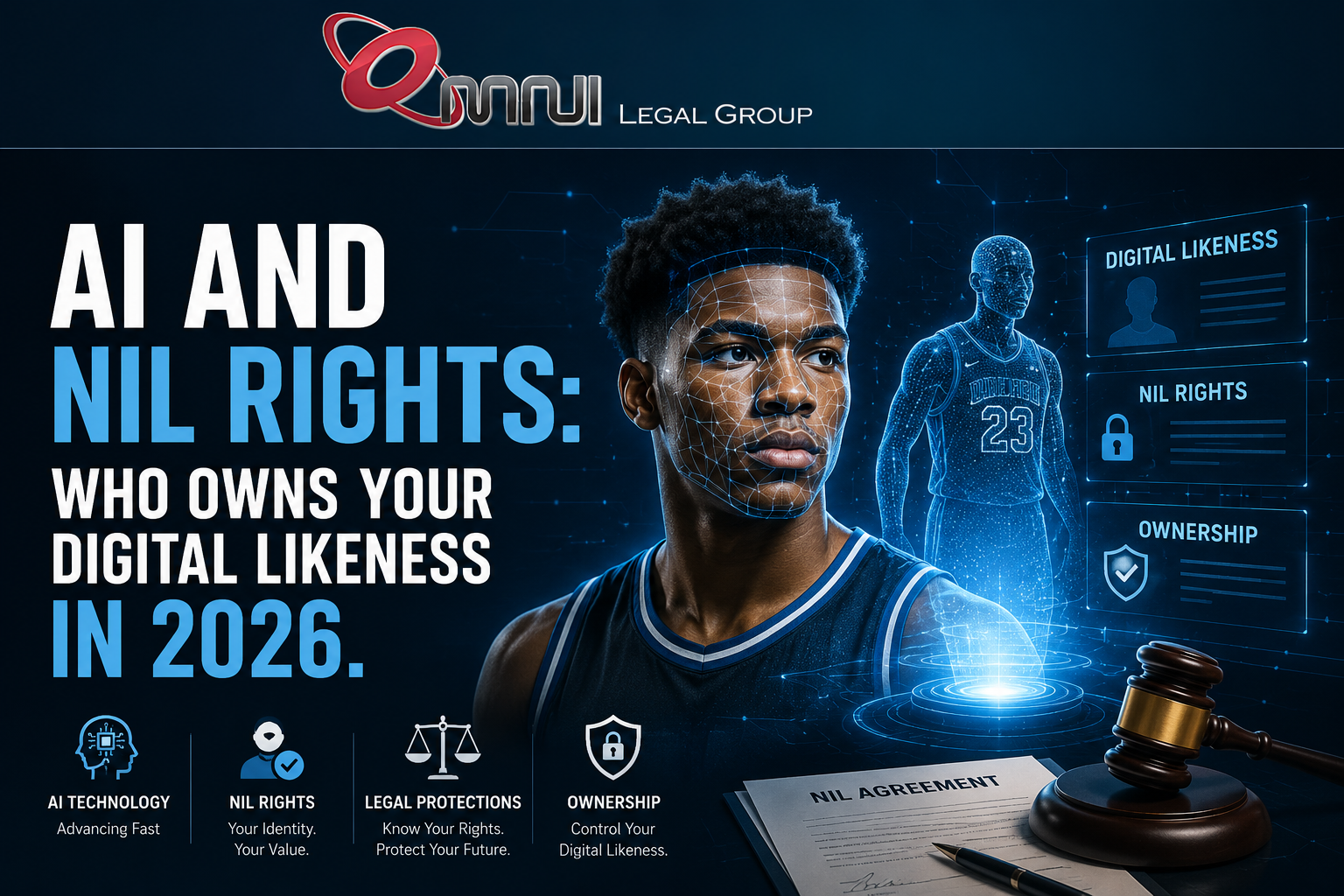
The rapid evolution of generative artificial intelligence is reshaping the conversation around Name, Image, and Likeness (NIL) rights in ways few industries were fully prepared for. AI tools can now generate highly realistic audio, video, images, and written content that convincingly replicate a person’s voice, facial features, expressions, and even their unique style or personality, often without the individual’s knowledge, approval, or compensation. What once required major production resources can now be accomplished in minutes using publicly available AI platforms.
For athletes, entertainers, influencers, public figures, and the brands connected to them, this creates serious legal and commercial concerns. A synthetic voice recording, AI-generated endorsement, or digitally recreated likeness can spread online almost instantly, potentially misleading consumers, damaging reputations, violating endorsement agreements, and undermining the value of legitimate NIL licensing opportunities. As AI-generated content becomes more sophisticated and accessible, understanding how intellectual property law, right of publicity protections, and NIL rights apply in this rapidly changing landscape is no longer optional, it is essential for protecting identity, brand value, and long-term commercial rights in the digital age.
Ownership of the Digital Likeness
NIL rights traditionally protect an individual’s ability to control how their name, image, and likeness are used for commercial purposes. However, AI-generated content challenges these protections in ways that existing law was not designed to address. A generative model trained on publicly available images, videos, or recordings may produce a synthetic likeness that is commercially usable without technically reproducing any copyrighted material.
This raises a foundational question: who owns an AI-generated likeness? The answer currently varies by jurisdiction. In California, the right of publicity, which is codified under Civil Code Section 3344 and common law, grants individual’s broad rights over the commercial use of their identity. However, the applicability of these statutes to AI-generated content remains an evolving area. Courts have not yet established a uniform standard for when a synthetic likeness crosses the line into actionable misappropriation, and federal NIL legislation has yet to be enacted.
Legal Risks for Individuals and Brands
For individuals, the primary risks include unauthorized commercial use of their likeness in advertising or sponsored content, reputational harm resulting from fabricated statements or endorsements, and the displacement of legitimate licensing revenue. Athletes and entertainers who have existing NIL agreements may also face complications when AI-generated content appears to conflict with exclusivity provisions, even if the individual had no involvement in creating it.
Brands and agencies face corresponding exposure. Deploying AI tools that generate content featuring recognizable individuals, even inadvertently, may give rise to right-of-publicity claims, false endorsement claims under the Lanham Act, or breach of contract where NIL agreements are in place. The burden to ensure that AI-generated content does not misappropriate a person’s identity is increasingly being placed on the companies that deploy these systems.
Steps to Protect Identity in an AI-Driven Landscape
Both individuals and brands can take concrete steps to reduce their exposure. For individuals, this includes registering likeness rights where available under applicable state law, reviewing and updating existing licensing agreements to include explicit provisions governing AI-generated content, auditing their digital presence for data that may be used to train AI systems, and monitoring platforms for unauthorized synthetic reproductions. Documentation of existing NIL agreements and a clear record of authorized uses can also be valuable if a dispute arises.
For brands and marketing agencies, best practices include updating vendor and technology contracts to address AI-specific use cases, conducting rights clearance reviews before publishing any AI-assisted creative content, and establishing internal governance policies that define appropriate use of generative tools. When entering into NIL partnerships with athletes or public figures, brands should consider negotiating specific addenda that define permissible and impermissible uses of AI in connection with the individual’s likeness.
At the legislative level, California and several other states have begun introducing AI-specific NIL protections. Stakeholders who engage with these regulatory processes early, whether as advocates or informed commenters, will be better positioned as the legal framework continues to develop.
Have Questions? Speak with a Los Angeles IP Lawyer About NIL and AI Rights
AI-generated content is evolving rapidly, and businesses, athletes, creators, and public figures can no longer afford to treat digital identity protection as an afterthought. As NIL rights, AI voice cloning, deepfakes, and synthetic likeness technology continue to expand, the legal risks surrounding identity misuse, false endorsements, and unauthorized commercial exploitation are becoming increasingly complex. Taking proactive legal steps now can help you protect your brand value, reputation, and future licensing opportunities before disputes arise.
At Omni Legal Group, our Los Angeles intellectual property attorneys help clients navigate the evolving intersection of AI, NIL rights, branding, and digital identity protection. Our legal team works closely with athletes, influencers, entrepreneurs, agencies, and growing businesses to develop forward-thinking legal strategies designed to protect valuable names, images, likenesses, and commercial rights in an increasingly AI-driven marketplace.
Whether you are negotiating NIL agreements, protecting your brand from unauthorized AI-generated content, or developing long-term licensing strategies, having the right legal framework in place can make all the difference.
Protect your identity before someone else profits from it.
Contact Omni Legal Group today to schedule a confidential strategy session with a Los Angeles IP lawyer. Call 855.433.2226 to speak with our legal team and take the next step toward securing your digital identity, protecting your commercial rights, and strengthening your brand for the future. To learn more, visit www.OmniLegalGroup.com.