
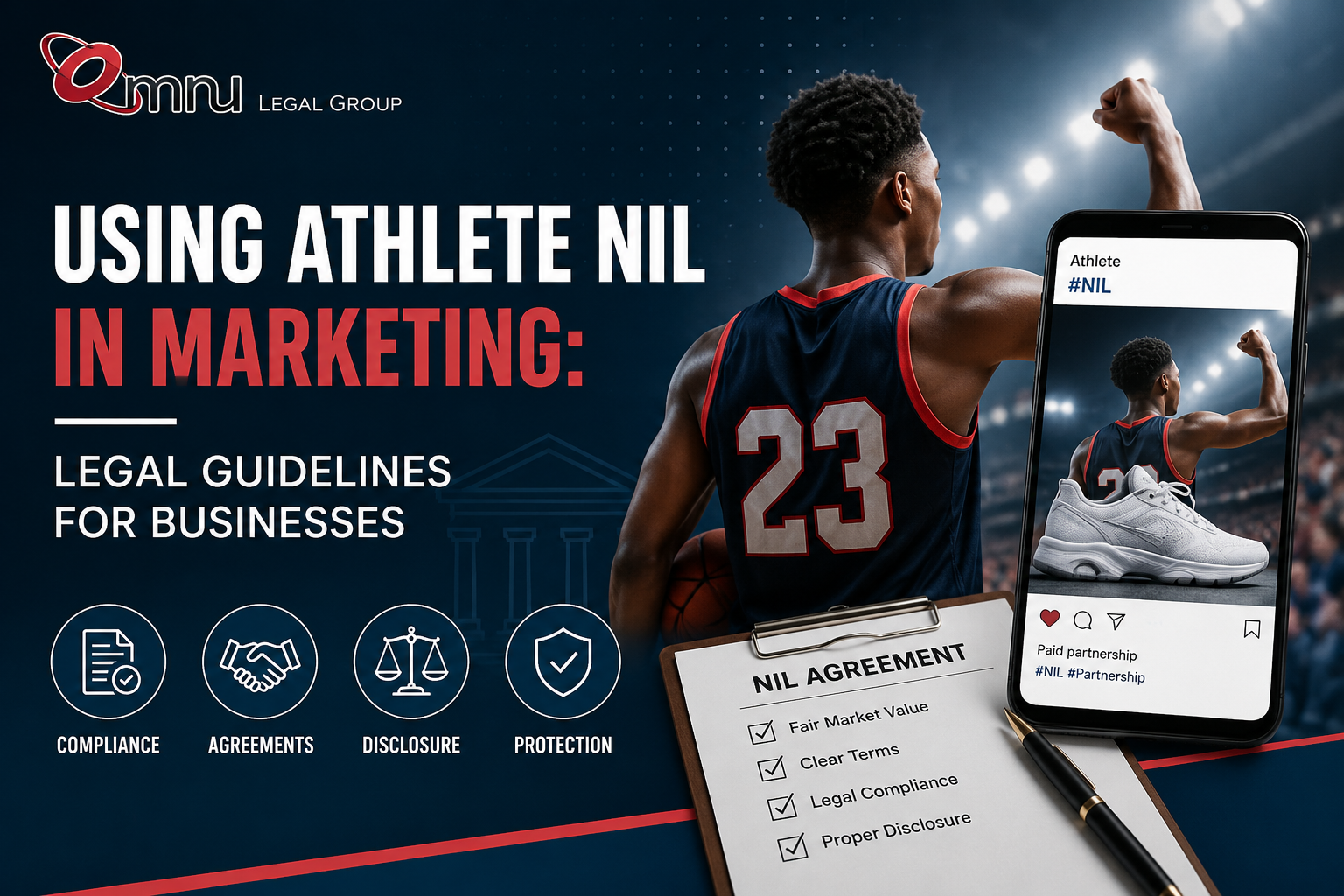
Partnering with athletes through Name, Image, and Likeness (NIL) arrangements has rapidly become one of the most influential marketing strategies in modern advertising. From local businesses and emerging startups to national brands and major media companies, organizations are increasingly leveraging athlete recognition, social influence, and personal branding to drive visibility, strengthen consumer trust, and connect with highly engaged audiences. In today’s digital economy, athletes are no longer viewed solely as competitors on the field or court, they are brands with significant commercial value and powerful marketing reach.
However, NIL partnerships are not simple sponsorship deals or casual endorsement arrangements. They involve a complex intersection of intellectual property rights, publicity rights, advertising regulations, contract law, and collegiate compliance requirements. A poorly structured NIL campaign can expose businesses to significant legal and financial risks, including unauthorized use claims, FTC advertising violations, breach of contract disputes, reputational damage, and conflicts with NCAA or institutional policies.
For Los Angeles businesses in particular, where sports, entertainment, media, and influencer marketing frequently overlap, understanding the legal framework surrounding NIL is essential. Compliance with California’s right-of-publicity laws, federal advertising standards, and evolving collegiate NIL regulations is critical to protecting both the business and the athlete involved. Companies that approach NIL strategically and with the proper legal safeguards in place are far better positioned to maximize marketing value while minimizing costly disputes and regulatory exposure.
What NIL Rights Cover and Why Consent Is Non-Negotiable
In California, an individual’s right to control commercial use of their name, image, and likeness is protected under Civil Code Section 3344 and the common law right of publicity. These rights apply to professional athletes, college athletes, and, in certain circumstances, high school student athletes as well. Using an athlete’s identity, whether their name, photo, voice, or jersey number, in any commercial context without prior written authorization constitutes a violation that can expose a business to significant liability, including statutory damages, injunctive relief, and the athlete’s lost profits.
The threshold requirement for any NIL marketing campaign is clear, documented consent. Verbal agreements and assumed permissions are insufficient. Before any content is created, published, or distributed, businesses must secure written authorization from the athlete, or in the case of minors, from a parent or legal guardian.
Structuring a Legally Sound NIL Contract
A well-drafted NIL agreement is the foundation of any compliant marketing arrangement. At a minimum, the contract should define the specific rights being granted, including which channels, formats, and time periods are authorized, and clearly identify the compensation structure, whether monetary, in-kind, or revenue based. The agreement should also specify exclusivity terms, if any, to avoid conflicts with the athlete’s other sponsorship relationships.
For college athletes, additional contract considerations apply. Following the NCAA’s 2021 policy change permitting student-athletes to earn NIL compensation, schools, conferences, and state education codes have established varying compliance requirements. In California, Education Code Section 67456 governs college athlete NIL activity and prohibits certain arrangements that conflict with institutional scholarship agreements. Businesses engaging college athletes should confirm that proposed deals are permissible under the athlete’s school policies and do not jeopardize their eligibility and should document that review in writing.
Federal Advertising Compliance: FTC Endorsement Guidelines
Beyond state law, businesses must comply with Federal Trade Commission (FTC) endorsement guidelines when athlete NIL is used in advertising. The FTC requires that any material connection between a brand and an endorser, including payment, free products, or other compensation, be clearly and conspicuously disclosed. This applies across all media, including social media posts, digital advertising, in-store signage, and broadcast campaigns. Failure to include proper disclosures can result in FTC enforcement action against both the business and the athlete. Contracts should allocate responsibility for disclosure compliance clearly between the parties.
Common Risks to Avoid
Several recurring issues arise in NIL marketing disputes. First, businesses frequently exceed the scope of the rights granted and wind up using an athlete’s likeness in channels, markets, or time periods not covered by the original agreement.
Second, repurposing older content that was licensed for one campaign without renegotiating rights is a common source of liability.
Third, using a retired or former professional athlete’s likeness requires the same formal authorization as active athletes; right-of-publicity rights do not expire upon the end of a playing career.
Businesses should also be cautious about using jersey numbers, team logos, or other elements that belong to third parties, typically sports leagues or universities, and are subject to separate licensing requirements. An NIL agreement with an individual athlete does not convey rights to any affiliated institutional intellectual property.
Have Questions About Using Athlete NIL in Marketing? Contact Our Los Angeles Law Firm Today
Athlete NIL partnerships can create tremendous business opportunities, but they also come with significant legal responsibilities that businesses cannot afford to overlook. A successful NIL campaign requires far more than simply paying an athlete to promote a product or service. Businesses must ensure they have properly documented consent, clearly drafted licensing rights, compliant advertising disclosures, and contracts that carefully define how an athlete’s name, image, and likeness may be used across digital, social media, print, video, and live marketing campaigns.
As NIL regulations continue to evolve, particularly at the collegiate level, businesses that fail to approach these partnerships strategically may expose themselves to unnecessary legal and financial risk. Improper use of an athlete’s likeness, unclear exclusivity provisions, violations of FTC endorsement rules, or conflicts with school and conference policies can quickly lead to disputes, reputational harm, and potential liability. For Los Angeles businesses operating at the intersection of sports, entertainment, media, and influencer marketing, having the right legal guidance in place is becoming increasingly important.
At Omni Legal Group, our Los Angeles intellectual property attorneys help businesses, brands, agencies, and entrepreneurs structure NIL partnerships with clarity and confidence. We assist clients with NIL agreements, endorsement contracts, licensing terms, publicity rights, FTC compliance, brand protection strategies, and risk management protocols designed to support long-term growth while minimizing legal exposure.
Whether your company is partnering with college athletes, professional athletes, influencers, or emerging creators, proactive legal planning can help protect your investment and strengthen the value of your marketing campaigns.
Build smarter NIL partnerships with the right legal strategy behind them.
Contact Omni Legal Group today to schedule a confidential strategy session with an IP lawyer in Los Angeles. Call 855.433.2226 to speak with our legal team and take the next step toward protecting your brand, strengthening your marketing agreements, and navigating the evolving NIL landscape with confidence. To learn more, visit www.OmniLegalGroup.com.