
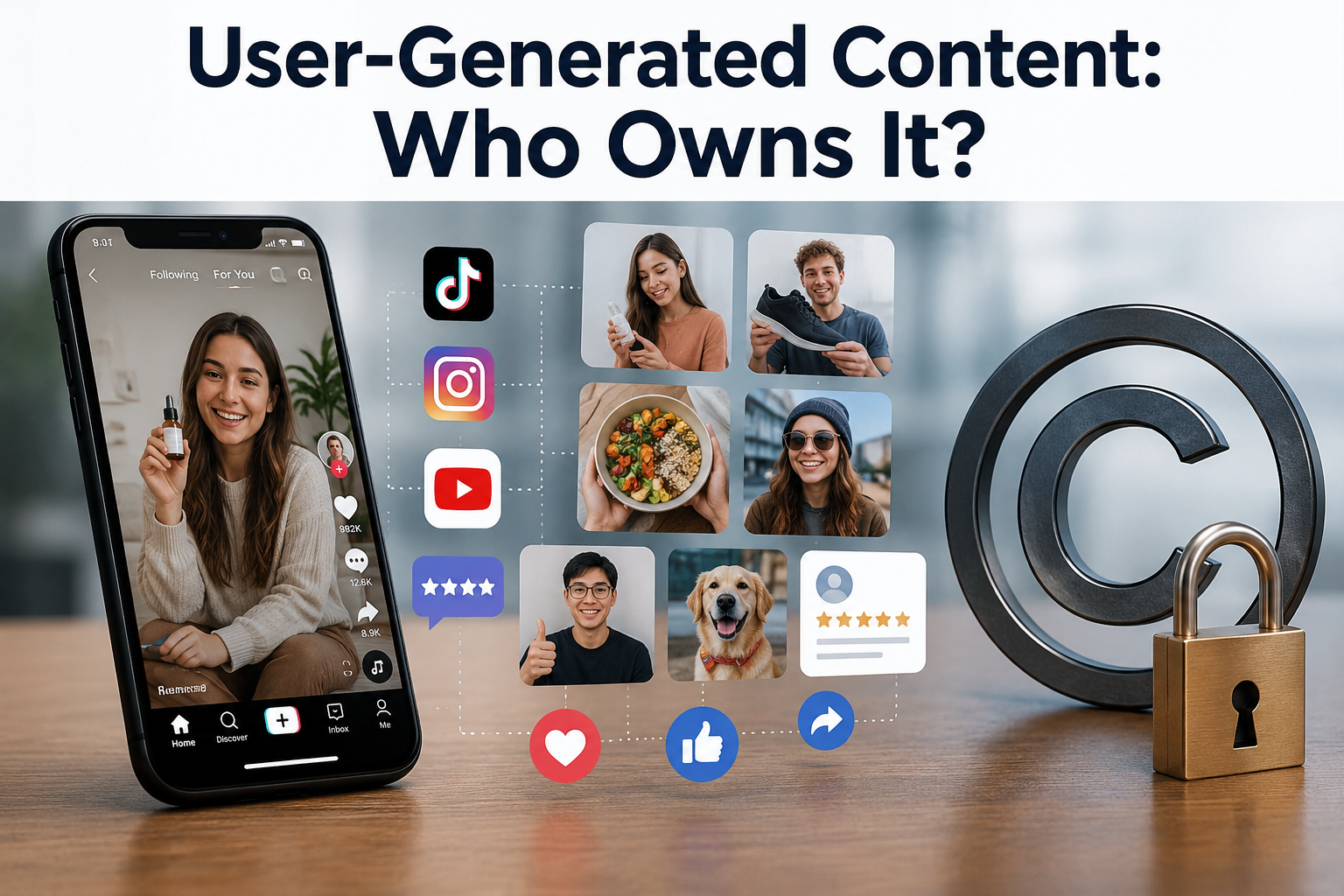
In the age of TikTok, Instagram, YouTube, and online reviews, user-generated content has become one of the most valuable marketing tools for businesses. A customer posts a video featuring your product, tags your brand, and suddenly thousands of people are watching. It sounds like a win, but there is an important question businesses often overlook: Who actually owns that content? In most cases, the person who creates an original photo, video, review, or other creative work generally owns the copyright in that content, even when the content features your brand or product. That means a business cannot always assume that because someone posted about its product, the business is free to download, edit, advertise, or repost that content however it wants.
This distinction becomes especially important when a piece of user-generated content takes off. Imagine a customer posts a TikTok showing themselves using a skincare product, and the video suddenly goes viral. The company may want to put that same video in a paid advertisement, on its website, or across its social media accounts. But simply being featured in the video does not necessarily give the company copyright ownership. This issue has also surfaced in pop culture, where brands and celebrities have faced disputes over who can use photos, videos, or other creative works for commercial purposes. The lesson for businesses is simple: liking, sharing, or being featured in content is not the same as owning the rights to use it.
So, what should a business do? Start by having clear terms and agreements in place. If you run a campaign asking customers to submit photos or videos, your terms should explain exactly how the business may use that content. For individual posts, getting written permission or a license can also help. A license does not necessarily mean transferring ownership. Instead, it can give the business specific rights to use the content, such as permission to repost it on social media or include it in advertising. The more valuable the content, the more important it is to be specific about what is permitted, where the content can be used, and for how long.
There is another layer to consider: trademark and publicity rights. User-generated content may contain your business name, logo, products, or even a person’s name, image, or likeness. These are separate legal issues from copyright. For example, a customer might voluntarily post a photo wearing a company’s clothing, but that does not automatically mean the company has permission to use the customer’s face in a national advertising campaign. Similarly, a creator’s video may feature a recognizable brand, but the creator still may have copyright rights in the video itself. Understanding the difference between copyright, trademark, and publicity rights can help businesses avoid turning a successful social media moment into an expensive legal problem.
Have Questions About User-Generated Content? Speak to a Los Angeles Copyright Lawyer Today
User-generated content can be an incredibly valuable marketing asset, but a viral post featuring your business does not automatically become your property. Before reposting a customer’s photograph, incorporating a TikTok into an advertising campaign, featuring an influencer’s video on your website, or modifying creator content for commercial use, it is important to understand exactly what rights your business has and what permissions may still be required.
These issues can become particularly complicated because multiple rights may exist within a single piece of content. The creator may own the copyright in the photograph or video, while another individual appearing in the content may have rights involving the commercial use of their name, image, likeness, or voice. Your company may separately own trademarks appearing within the content. Understanding how these rights intersect is critical before successful user-generated content becomes part of a larger marketing or advertising campaign.
For businesses that regularly rely on customer submissions, influencer partnerships, social media campaigns, or creator content, establishing clear licensing terms and usage policies from the beginning can help prevent future disputes. The goal should not simply be obtaining permission to repost something once, but making sure your business has the appropriate rights for how, where, and for how long it intends to use valuable content.
At Omni Legal Group, our Los Angeles intellectual property attorneys help businesses, entrepreneurs, influencers, and creators navigate copyright ownership, content licensing, user-generated content agreements, rights of publicity, trademark issues, and other legal questions arising from today’s digital marketplace. We can help you determine what rights you already have, what additional permissions may be necessary, and how to structure agreements that support your marketing goals while protecting your business.
Before turning someone else’s content into your company’s next marketing asset, make sure you have the legal right to use it.
Contact Omni Legal Group today to schedule a confidential strategy session with one of our IP lawyers in Los Angeles. Call 855.433.2226 to speak with our legal team about protecting your business while making the most of user-generated content.
To learn more, please visit www.OmniLegalGroup.com.